
Visiting Córdoba in 2026 offers an unparalleled journey into layered history, from the awe-inspiring Mezquita-Catedral to the intimate courtyard culture, with insider tips that transform a standard trip into a deep cultural immersion.
Córdoba 2026: Essential Planning Facts & Data
| 📍 Location: | Northern Andalusia, on the Guadalquivir River. 138 km northeast of Seville, 166 km south of Madrid via A-4/E5. |
| 🏙️ Population: | Approximately 325,000 in the city proper; over 780,000 in the metropolitan area (2026 estimate). |
| 📜 UNESCO Status: | Historic Centre (inscribed 1984), Festival of the Patios (Intangible Cultural Heritage, 2012), Medina Azahara (2018). |
| 🚄 High-Speed Train (AVE): | Madrid → Córdoba: 1h 45min | Seville → Córdoba: 45min | Málaga → Córdoba: 55min | Barcelona → Córdoba: 5h 15min. |
| 🌡️ Best Time to Visit: | Spring (March-May, avg 15–25°C) & Autumn (Sept-Oct, avg 18-28°C). July-August averages 37°C, with peaks exceeding 42°C. |
| 🎟️ Mezquita-Catedral Ticket 2026: | €13 general admission. Free access: Mon-Sat 8:30-9:30 AM (excluding religious holidays). Bell Tower ascent: €3 extra, timed slots required. |
| 🚗 Critical Driving Note: | Permanent Low Emission Zone (ZBE) covers historic center. Only “Cero Emisiones” (Zero Emissions) or “Eco” labeled vehicles permitted. Fines start at €200. |
| 🌸 2026 Peak Festival Dates: | Festival de los Patios: First two full weeks of May (anticipated May 4-15, 2026). Book accommodation 6-9 months in advance. |
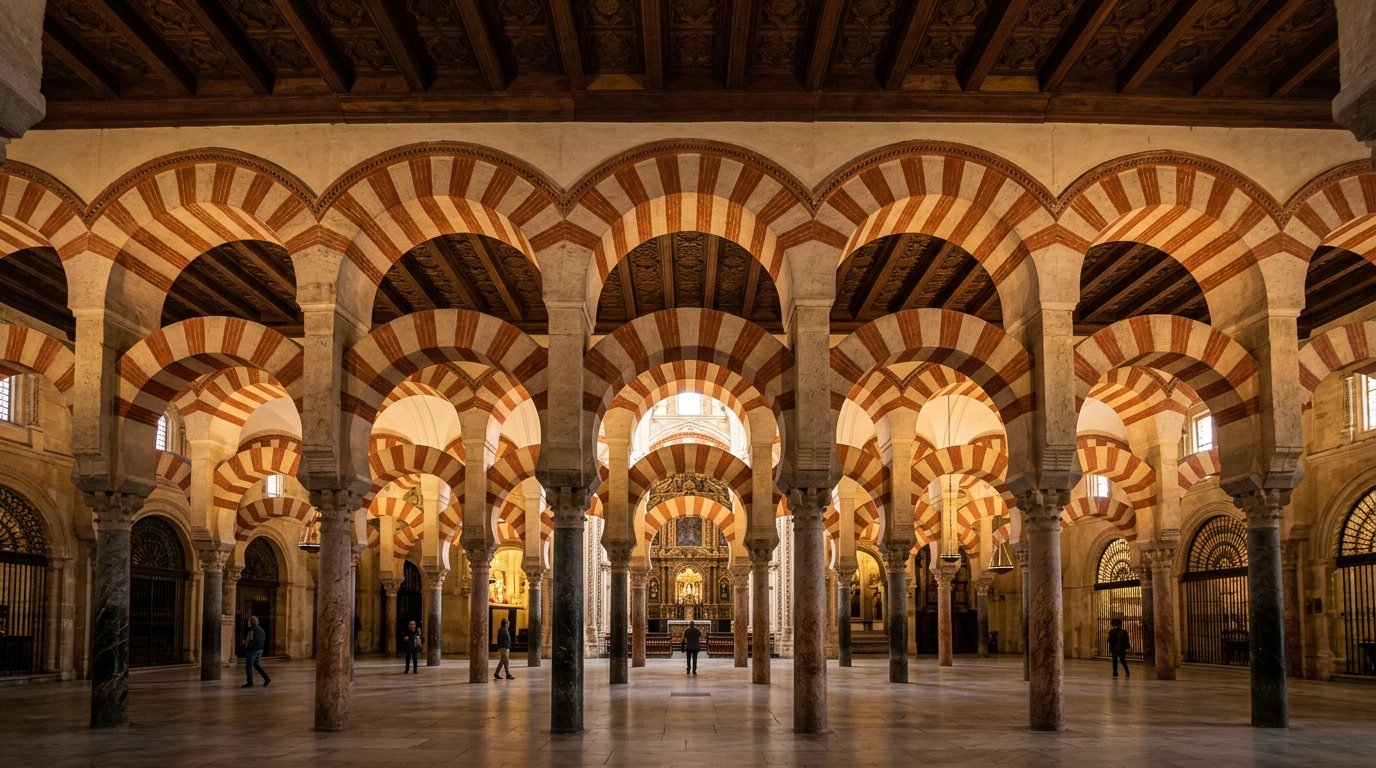
Why Is the Mosque-Cathedral of Córdoba the Defining Monument of Spanish History?
The Mosque-Cathedral of Córdoba, known locally as La Mezquita, stands as a physical testament to Spain’s intricate historical tapestry. As the only major cathedral in the world constructed within a functioning Great Mosque, it encapsulates over a millennium of artistic, religious, and political evolution. Projected to attract over 2.1 million visitors in 2026, this UNESCO World Heritage Site symbolizes the dialogue and conflict between Islamic and Christian civilizations. Its unique architecture—a forest of Islamic arches surrounding a Gothic-Renaissance nave—offers a tangible narrative of Andalusia’s past, making it essential for understanding Spain’s cultural identity. The site continues to serve as an active Catholic cathedral, blending worship with tourism under strict conservation guidelines established in 1984.
The Architectural Evolution: From Roman Temple to Caliphal Grandeur
The foundation of the Mezquita dates back to Roman times, with archaeological evidence confirming a temple dedicated to Janus on the site. This was followed by the Visigothic Basilica of San Vicente in the 6th century. In 785 AD, Emir Abd al-Rahman I, an exiled Umayyad prince, initiated the construction of the Great Mosque, purchasing the Christian site to assert political and spiritual authority. The initial phase reused over 1,200 columns and capitals from Roman and Visigothic ruins, a practice known as spolia, which symbolized the integration of the new Islamic state into the Iberian Peninsula’s ancient heritage. The iconic double-tiered arches, composed of red brick and white stone, were an engineering innovation that allowed for a ceiling height of nearly 12 meters (39 feet) using shorter columns, creating the hall’s mesmerizing, infinite perspective. This design was inspired by the Great Mosque of Damascus, reflecting nostalgia for the lost Umayyad homeland. The expansion under Caliph Al-Hakam II (961-976 AD) introduced the famed mihrab, a prayer niche adorned with 1,600 kilograms of gold Byzantine mosaics. Notably, the mihrab faces south rather than southeast toward Mecca, a pragmatic adjustment to Córdoba’s Roman street grid, illustrating the interplay between religious ideals and urban practicality.
The Christian Transformation: A Cathedral Within a Mosque
After the Christian Reconquest of Córdoba in 1236, the building was consecrated as the Cathedral of Santa María but remained largely unchanged for nearly three centuries. The pivotal transformation began in 1523 when King Charles V authorized the construction of a Gothic-Renaissance cathedral nave within the mosque’s core. Led by the Hernán Ruiz family of architects, this 240-year project (1523-1766) inserted a vertical, ornate Christian structure into the horizontal Islamic prayer hall. The central nave soars to 42 meters (138 feet), featuring Plateresque and Baroque details that starkly contrast with the serene geometry of the horseshoe arches. This juxtaposition has sparked debate for centuries, with an apocryphal quote attributed to Charles V: “You have destroyed something unique to build something commonplace.” Today, conservation efforts, guided by UNESCO mandates and the Diocese of Córdoba, prioritize preserving both layers as an inseparable historical record. Managing over 5,000 daily visitors while maintaining spiritual integrity is a key challenge for 2026, requiring advanced ticketing and crowd control measures.
Strategic Visitor Tips for 2026: Maximizing Your Experience
To navigate the Mezquita efficiently in 2026, plan ahead. General admission tickets cost €13 and should be purchased online via the official Cathedral website to avoid long queues. The free morning access (Monday to Saturday, 8:30-9:30 AM) now requires a mandatory online reservation, with slots released 30 days in advance and often booking out within minutes. Arrive by 7:45 AM to secure your spot. For a panoramic view, ascend the Bell Tower—the transformed minaret—for an additional €3; book timed tickets at least four weeks ahead, with the 2:30 PM slot offering ideal lighting for photography. Consider investing in a certified expert-led tour (€30-€50) from the Official Association of Andalusian Guides to decode architectural details like the Visigothic carvings on the Puerta de San Esteban. Peak crowds occur between 11:00 AM and 4:00 PM; visiting during the final entry slot provides thinner crowds and dramatic evening light casting shadows through the arcades, perfect for capturing the site’s ethereal beauty.
How Can You Experience Authentic Cordoban Courtyard Culture Beyond the May Festival?
Cordoban patios are bioclimatic masterpieces and a philosophy of inward-focused living, refined over two millennia. While the UNESCO-recognized Festival de los Patios in May attracts global attention, authentic courtyard culture thrives year-round in over 1,500 significant patios across the city. In 2026, travelers can explore these spaces as functional living areas in museums, taverns, and private homes, offering a glimpse into the city’s soul beyond the floral spectacle. This tradition originates from Roman atriums and was enhanced during Al-Andalus, reflecting Islamic values of privacy, family, and paradise as a walled garden. The design is practical: whitewashed walls deflect summer heat, central fountains cool through evaporation, and potted plants provide shade and fragrance. UNESCO’s 2012 Intangible Heritage designation honors the social rituals—communal knowledge, plant swapping, and neighborhood rivalry—that sustain this living tradition.
Palacio de Viana: A Comprehensive Guide to Twelve Courtyards
The Palacio de Viana, a 14th-century noble residence known as the “Museum of Patios,” is an essential stop. Its twelve distinct courtyards serve as a chronological encyclopedia of Cordoban patio design. From the utilitarian Patio de los Gatos, once housing servants, to the grand Patio de los Naranjos with its columned arches, and the exquisite 18th-century tilework of the Patio de la Madama, each space illustrates social function and aesthetic evolution. Admission in 2026 costs €10 and includes an informative audio guide. Daily visitor numbers are capped at 300 to preserve the experience; secure tickets online 48-72 hours in advance, especially from March to June. Late afternoon visits offer soft lighting and fewer tour groups, allowing for quiet appreciation of architectural details like the traditional maceta cordobesa terracotta pots and native plant species.
Discovering Living Patios: Residential and Commercial Access
Beyond the 60 patios in the official May competition, approximately 1,500 courtyards exist in neighborhoods like San Basilio, Santa Marina, and San Agustín. Year-round, many homeowners open their doors for voluntary donations (€1-€3); look for signs reading “Patio Abierto” or “Se Visten los Patios.” The Municipal Tourist Office on Plaza de las Tendillas provides updated seasonal maps of accessible patios. Additionally, businesses operate within stunning patio houses, such as Bodegas Campos, founded in 1908, where you can enjoy local Montilla-Moriles fino in a grand courtyard. The Museo de la Alquimia, housed in a 14th-century home, features a central patio explaining medieval science. For casual exploration, stroll streets like Calle San Basilio and peer through open zaguanes (carriage doorways) to catch glimpses of domestic paradises filled with the sound of trickling water and scent of jasmine.
The Hidden Science: Botany and Sustainable Practices
A true Cordoban patio is a scientifically curated garden. Beyond iconic geraniums, connoisseurs appreciate plants like sky-blue plumbago, nocturnal jasmine, architectural monstera, and vibrant bougainvillea. Myrtle is sculpted into geometric hedges, while bitter orange trees provide structure and fragrance. The traditional maceta cordobesa, an unglazed terracotta pot, is crucial for regulating soil temperature and preventing root rot in Córdoba’s climate. Strategic plant arrangement creates microclimates up to 12°C (22°F) cooler than adjacent streets, a vital adaptation to Andalusian summers. In 2026, the city’s “Green Patios” initiative promotes drought-resistant native species like rosemary, lavender, and salvias, adding ecological awareness to this ancient art form. This focus on sustainability ensures the tradition evolves while preserving its core principles.
What Are the Profound Historical Layers of Córdoba’s Jewish Quarter (Judería)?
Córdoba’s Judería is a globally significant Sephardic heritage site, renowned as the birthplace of philosopher Maimonides (1135-1204). While Calle Judíos draws crowds, the quarter’s depth lies in its quiet corners and the legacy of La Convivencia, a period of relative coexistence among Jewish, Muslim, and Christian communities under Umayyad rule. Covering 30 hectares, it remains a living residential neighborhood where history is etched into the walls, offering a contemplative experience distinct from other Spanish Jewish quarters. At its 10th-century zenith, Córdoba’s Jewish community thrived as scholars, physicians, and artisans, contributing to the city’s golden age. The labyrinthine design, with narrow streets like Calleja de la Luna, provided shade, privacy, and communal defense, preserving an urban fabric that allows visitors to walk medieval routes today.
Essential Sites with Deeper Context for 2026
The Synagogue of Córdoba, built in 1315, is one of only three pre-1492 synagogues remaining in Spain. Its modest size reflects the community’s diminished post-Reconquest status, yet its Mudéjar stuccowork features intricate floral motifs, geometric patterns, and Hebrew inscriptions from Psalms. The symbolic entrance fee of €0.30 emphasizes its role as a monument of memory. Opposite, the Casa de Sefarad museum, housed in a restored 14th-century home, offers exhibitions on Sephardic domestic life, music, and the Inquisition. In 2026, look for specialized exhibits on the Ladino (Judeo-Spanish) language, often accompanied by live Sephardic music concerts in the central patio. A combined ticket for both sites costs €5 and provides essential narrative context, enhancing understanding of the quarter’s cultural significance.
The Art of Intentional Wandering: Discovering Silent Stories
To escape tourist flows, explore streets like Calle Averroes or Calle Albucasis, named for famed Andalusian philosophers. Seek out serene spots like Plaza de Tiberíades. While Calleja de las Flores is iconic, Calleja del Pañuelo offers equally charming views with fewer crowds. For the observant, history is inscribed in building fabric: on older doorframes, faint rectangular indentations mark where mezuzah cases were removed after the 1492 Alhambra Decree expelled Jews from Spain. These subtle scars are poignant reminders of a dispersed community. Allocate at least half a day for wandering without a rigid agenda, ideally in early morning or late afternoon golden light when the narrow streets glow and historical echoes feel most palpable. This approach reveals layers often missed by hurried tours.
Where Do Locals Eat and What Truly Defines Cordoban Cuisine in 2026?
Cordoban cuisine is hearty, flavorful fare rooted in the campo (countryside), built on a holy trinity of extra virgin Picudo olive oil, garlic, and bread. Elevated by local game, river fish, and unique Montilla-Moriles wines, it features platos de cuchara (spoon dishes) and expertly fried delights. In 2026, the trend emphasizes hyper-local, seasonal ingredients, with a new generation of chefs offering modern interpretations without sacrificing tradition. While Michelin-recommended spots exist, the heart of dining remains in historic tabernas where recipes are generations old. This culinary philosophy celebrates resourcefulness and slow-cooked flavors, reflecting Andalusia’s agricultural heritage.
Signature Dishes Decoded: A Culinary Deep Dive
Salmorejo Cordobés: More than a thick gazpacho, this is a rich, creamy emulsion made from day-old pan de telera bread, ripe tomatoes, garlic, and generous Picudo olive oil—typically 200ml per kilogram of tomatoes. It contains no cucumber or pepper. Served chilled and topped with diced Iberian ham and hard-boiled egg, it’s a complete meal. Its pale orange color and velvety texture distinguish it from other Spanish cold soups.
Flamenquín Cordobés: A masterclass in frying, this dish involves pounding lean pork loin thin, wrapping it around jamón serrano, rolling tightly, breading, and deep-frying at 180°C (356°F) until golden. The name “little Fleming” may refer to its golden hue, reminiscent of Flemish soldiers’ hair during Charles V’s reign. It’s often served with fries or salad.
Rabo de Toro: This oxtail stew embodies patience, braised for 3-4 hours with onions, carrots, and Montilla-Moriles Oloroso wine until fall-apart tender. Traditionally enjoyed after bullfighting events, it represents nose-to-tail cooking. In 2026, chefs may add contemporary twists, but the classic recipe remains a winter staple.
Authentic 2026 Dining: From Historic Taverns to Modern Bistros
For benchmark salmorejo, visit Taberna Salinas (Calle Tundidores, 3), operating since 1879. Their version, served in earthenware bowls, is canonical and pairs perfectly with chilled fino. For definitive flamenquín, join locals at Bar Santos (Calle Magistral González Francés, 3), a no-frills spot known for massive, perfectly fried portions. El Churrasco (Calle Romero, 16) remains the temple for rabo de toro and grilled meats, with reservations essential several days ahead. To explore local wine, head to Taberna La Montillana (Calle San Álvaro, 5), where fino is drawn directly from barrels. For modern twists, Bodega Mezquita (Calle Corregidor Luis de la Cerda, 73) offers innovative tapas rooted in tradition. Avoid tourist traps on Calleja de las Flores; instead, venture to San Lorenzo or Plaza de la Corredera for menú del día options priced €12-€15, offering better value and authenticity.
Montilla-Moriles Wine: The Local Secret Beyond Sherry
While Sherry from Jerez is famous, Córdoba’s Montilla-Moriles Denominación de Origen, 40 km south, produces exceptional wines using the Pedro Ximénez grape. Unlike most Sherry, these wines are naturally fermented to high alcohol without fortification. Visit traditional bodegas like Bodegas Alvear (founded 1729) to taste a spectrum from dry, nutty fino to rich, sweet Pedro Ximénez. In 2026, urban wine bars like “La Tintorería” make these wines accessible with curated flights, highlighting the region’s unique albero soil. This underrated wine region adds depth to Cordoban gastronomy, with pairings enhancing local dishes like salmorejo or rabo de toro.