
The seven best day trips from Madrid in 2026 are Toledo, Segovia, San Lorenzo de El Escorial, Ávila, Aranjuez, Cuenca, and Chinchón. Each offers a distinct, profound cultural experience within a 90-minute journey, perfectly balancing deep history with practical logistics for a seamless escape.

What Makes a Day Trip from Madrid Perfect in 2026?
A perfect day trip from Madrid in 2026 is defined by three non-negotiable criteria: accessibility, historical density, and logistical smoothness. The destination must be reachable within 90 minutes one-way via Spain’s high-speed AVE train or efficient regional transport. It should contain a walkable, concentrated historic core offering at least five to seven hours of substantial, culturally rich exploration. Crucially, the return schedule must allow you to be comfortably back in Madrid by 10:00 PM for a late dinner. Madrid’s unique geographic position at the heart of the Iberian plateau places it within a 100-kilometer radius of six UNESCO World Heritage Sites, a density unmatched by any other European capital. The engine enabling this unparalleled access is Renfe’s extensive rail network, a system I’ve relied on for years. With Spain’s National Tourism Board projecting 2026 inbound visitors to exceed 2019 levels by 8%, strategic planning is essential. From my experience, securing AVE promotional fares requires booking 60 to 90 days in advance, and reserving timed entry slots for major monuments online is the single most important step to avoid wasting precious hours in queues.
2026 Comparison: The 7 Best Day Trips from Madrid at a Glance
| Destination | Travel Time | Transport & Round-Trip Cost | UNESCO Status | Key Experience | Best For |
|---|---|---|---|---|---|
| Toledo | 33 minutes | AVE, €21–€32 | Yes (1986) | Immersive multi-faith history & art | First-time visitors, history buffs |
| Segovia | 28 min + 25 min bus | AVE + bus, €18–€30 | Yes (1985) | Roman engineering & roast suckling pig | Architecture lovers, food enthusiasts |
| El Escorial | 60 minutes | Cercanías C-3a, €9.80 | Yes (1984) | Habsburg royal power & library | Royal history, cooler climate seekers |
| Ávila | 80 minutes | AVE, €24–€36 | Yes (1985) | Complete medieval walls & mystic atmosphere | Medieval immersion, crowd-free visits |
| Aranjuez | 50 minutes | Cercanías C-3, €8.20 | Yes (2001) | Bourbon gardens & relaxed palace tour | Gardens, families, leisurely pace |
| Cuenca | 55 minutes | AVE, €30–€45 | Yes (1996) | Cliffside houses & abstract art museum | Dramatic landscapes, modern art fans |
| Chinchón | 50 minutes | AVANZA bus 337, €6.80 | No | Authentic plaza life & anise liqueur | Offbeat village life, local immersion |
1. Toledo: Why Is This the Undisputed Champion for a First-Time Day Trip?
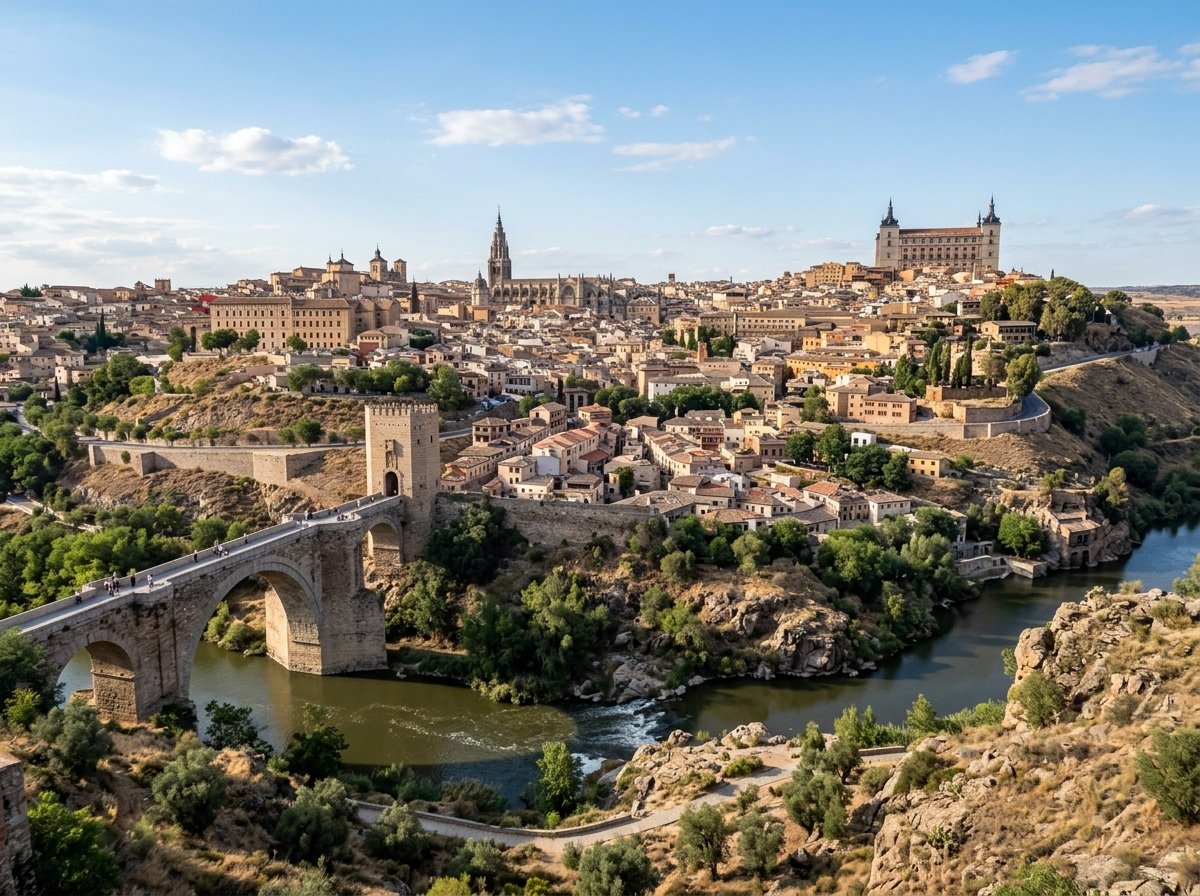
Toledo is not just a recommendation; it is the essential first day trip from Madrid. As the former capital of Spain until 1561 and a UNESCO World Heritage Site since 1986, the “City of Three Cultures” presents a breathtaking, tangible layering of Christian, Muslim, and Jewish history atop a granite hill encircled by the Tagus River. The 33-minute AVE ride from Madrid-Puerta de Atocha is one of Europe’s fastest and most scenic intercity connections. After countless visits, I’ve found the critical tactical move is catching the 08:50 AVE, arriving by 09:23. This grants you a 90-minute head start before the major coach tours arrive at 11:00 AM, transforming your experience from a crowded shuffle to a peaceful, profound exploration of silent, narrow streets.
Toledo Day Trip Itinerary & Practical Tips for 2026
Efficiency is key in Toledo’s labyrinth. From the stunning Neo-Mudéjar train station, use the public escalators (ascensores) to ascend to the old town. Your first stop must be the Toledo Cathedral. Immediately purchase the “Pulsera Turística” wristband (€13 in 2026) at the cathedral ticket office. This provides skip-the-line access to seven major monuments, saving you hours. After exploring the cathedral’s stunning interior and the Baroque Transparente, walk to the Jewish Quarter. Visit the Sinagoga de Santa María la Blanca, a 12th-century synagogue built by Islamic craftsmen, and the nearby Monastery of San Juan de los Reyes, commissioned by the Catholic Monarchs. For lunch, I highly recommend reserving at Restaurante Adolfo near the Plaza del Ayuntamiento for their celebrated partridge dish (menu €35–€40), or explore the vibrant tapas bars around Plaza del Solarejo for carcamusas (a local stew). In the afternoon, visit the imposing Alcázar (Army Museum) for its military history and panoramic rooftop views. Finally, cross the 14th-century San Martín Bridge for the 20-minute walk to the Mirador del Valle. This viewpoint offers the definitive, breathtaking panorama of Toledo’s silhouette against the late afternoon light—the perfect end to the day. Return for the 18:50 or 19:50 AVE to Madrid.
Booking Note: Secure AVE tickets on Renfe.com at least 60 days ahead for Promo fares as low as €10 each way. Always book a timed entry slot for the Cathedral online through the official website to avoid queues that regularly exceed 45 minutes in peak season (April-October).

2. Segovia: Is the Roman Aqueduct and Legendary Cochinillo Worth the Extra Logistics?
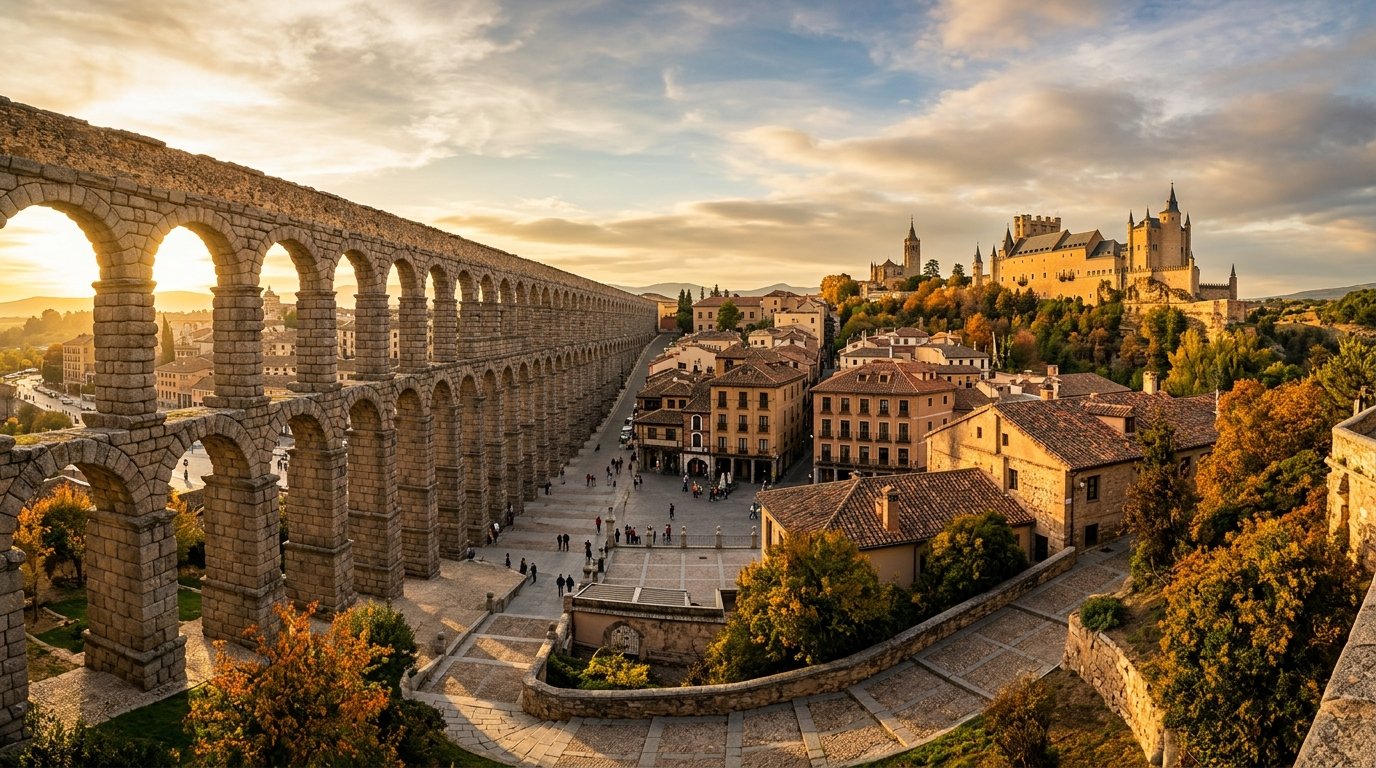
Without a doubt. Segovia delivers on two iconic Spanish experiences with unmatched authenticity: the awe-inspiring, mortar-free Roman Aqueduct (built circa 1st–2nd century AD) and cochinillo asado (roast suckling pig), a culinary ritual perfected here over centuries. The 28-minute AVE from Madrid-Chamartín to Segovia-Guiomar is swift, but a crucial detail often missed: the high-speed station is 7 kilometers from the historic center. You must factor in a 25-minute transfer via the Line 11 bus (€2, departs every 20 minutes) or a taxi (€12–€15). At 1,000 meters altitude, Segovia offers a refreshingly cooler climate in summer and a magical, snow-dusted ambiance in winter. The aqueduct, comprising 166 granite blocks held together by precision engineering and gravity alone, is best experienced in the early morning quiet before the day’s crowds gather at its base in the Plaza del Azoguejo.
Segovia Day Trip Itinerary & Practical Tips for 2026
After transferring from the station, start at the Aqueduct. Walk its length and climb the adjacent stairs for a close-up view. Then, stroll down the main pedestrian street, Calle Real, to the Segovia Cathedral (entry €5), a late-Gothic masterpiece known as “The Lady of Cathedrals” for its luminous interior and stunning collection of Flemish tapestries. The pinnacle of the visit is lunch. Reserve a table at Mesón de Cándido (Plaza del Azoguejo, 5), situated beneath the aqueduct arches. Here, the ceremonial cutting of the suckling pig with a plate demonstrates its legendary tenderness (set menu €55–€65). For a superb alternative, José María (Cronista Lecea, 11) offers excellent quality at a slightly lower price point. Post-lunch, visit the fairy-tale Alcázar (entry €10), famous for inspiring Walt Disney. Climb the 152 steps of the Juan II Tower for a 360-degree view over the city and plains. Allow at least 45 minutes for the bus or taxi return to Segovia-Guiomar station for your evening AVE.
3. San Lorenzo de El Escorial: What Historical Significance Lies in This Overlooked Monastery?
El Escorial is not merely a building; it is a monumental expression of Habsburg imperial power, piety, and intellect. Built by King Philip II between 1563 and 1584 to commemorate the Battle of Saint Quentin and serve as a dynastic pantheon, this UNESCO site (1984) is a vast complex of granite corridors encompassing a basilica, royal apartments, a breathtaking library, and the Royal Pantheon where most Spanish monarchs since Charles I rest. The one-hour Cercanías C-3a train from Atocha or Chamartín costs under €10 round trip, making it the most budget-friendly UNESCO destination from Madrid. The contrast between the austere, somber exterior and the opulent artistry within—from the celestial ceiling frescoes in the Royal Library to the marble and jasper of the Pantheon—creates a profound and humbling impact. Visitor numbers here are consistently 40% lower than Toledo’s, offering a more contemplative experience even on weekends.
El Escorial Day Trip Itinerary & Practical Tips for 2026
Upon arrival, purchase the “Complete Tour” ticket (€16 in 2026), which grants access to the Palace of Philip II, the Basilica, the Royal Library, and the Royal Pantheons. Allocate at least 2.5 hours to do justice to the scale and detail. The library, with its vaulted ceiling painted by Pellegrino Tibaldi depicting the seven liberal arts, and the Pantheon of the Kings, with its sumptuous marble and bronze, are absolute highlights. For lunch, walk into the town of San Lorenzo de El Escorial. Charolés (Floridablanca, 24) serves refined Castilian cuisine, while the casual bars along Calle Rey offer excellent tapas like patatas bravas and croquetas. If time permits, consider a short taxi ride (approx. €8) to the Silla de Felipe II, a rocky outcrop where the king allegedly watched his monastery’s construction, offering a stunning panoramic view of the complex against the Guadarrama mountains. Return via the frequent Cercanías service, which runs until late evening.
4. Ávila: Which Day Trip Offers the Most Authentic and Crowd-Free Medieval Experience?
Ávila provides the most complete and crowd-free medieval experience within easy reach of Madrid. Its defining feature is the 11th-century walls (Murallas), a 2.5-kilometer, 12-meter-high circuit with 88 semicircular towers that fully enclose the old town—the most intact example in Europe. At 1,132 meters altitude, the air is crisp and the atmosphere palpably contemplative, deeply connected to Saint Teresa of Ávila, the mystic reformer born here in 1515. According to Spain’s National Statistics Institute (INE), Ávila receives only about 600,000 annual visitors compared to Segovia’s 1.8 million, meaning morning arrivals feel genuinely peaceful and authentic. The 80-minute AVE from Chamartín transports you to a place where time seems to have settled into the stone, offering a profound sense of history without the jostling crowds.
Ávila Day Trip Itinerary & Practical Tips for 2026
Start at the Puerta del Alcázar to purchase the “Muralla Ticket” (€7) and walk the 1.2-kilometer elevated adarve (wall walkway) for unparalleled rooftop views over the city and the surrounding plains. Next, visit the Cathedral of Ávila, a Gothic fortress-church built into the city’s defenses, notable for its alabaster choir stalls and the first Gothic vaults in Spain. Then, explore the Convent of Saint Teresa, built on her birthplace, which houses relics and explains her Carmelite reform. For lunch, Ávila’s protected-beef chuletón is a must. Mesón del Rastro (Plaza del Rastro, 1) is the classic venue, serving the massive grilled T-bone steak alongside patatas revolconas (mashed potatoes with paprika). Finally, take a 25-minute walk or short taxi to the Los Cuatro Postes viewpoint across the Adaja River for the iconic photograph of the entire walled city silhouetted on the hill. Return via AVE in the late afternoon.
5. Aranjuez: Where Can You Find Royal Grandeur at a Truly Relaxed Pace?
Aranjuez answers the need for a day trip that rejuvenates rather than exhausts. Its 2001 UNESCO designation as a “Cultural Landscape” honors the harmonious dialogue between the Bourbon Royal Palace and the exquisite gardens along the Tagus River. The 50-minute Cercanías C-3 ride from Atocha costs just €8.20 round trip. The terrain is flat, the gardens are shaded by ancient trees, and the pace is inherently leisurely—a deliberate contrast to the demanding climbs of other destinations. It is ideal for families, couples, and travelers seeking beauty without a punishing schedule. From April to October, the historic Strawberry Train (Tren de la Fresa) runs on weekends from Madrid’s Railway Museum, offering a nostalgic steam-engine journey complete with strawberry tasting.
Aranjuez Day Trip Itinerary & Practical Tips for 2026
Begin at the Royal Palace (entry €12). The guided tour includes the stunning Porcelain Cabinet, a room entirely decorated with delicate Buen Retiro porcelain. Afterwards, lose yourself in the gardens. Cross to the formal Jardín de la Isla with its Renaissance fountains, then enter the vast, romantic Jardín del Príncipe, where you’ll find the neoclassical Casa del Labrador and the Museum of Royal Feluccas (ceremonial boats). For lunch, Casa Pablo (Almíbar, 42) near the market specializes in traditional stews and seasonal produce from the royal orchards, including the famous Aranjuez strawberries in spring. The return Cercanías service is frequent and straightforward, with trains departing every 30 minutes.
6. Cuenca: How Do the Hanging Houses Defy Gravity and Artistic Expectation?
Cuenca is the most visually dramatic and artistically surprising day trip from Madrid. The old town is perched on a narrow limestone ridge between the deep gorges of the Huécar and Júcar rivers. Its iconic Casas Colgadas (Hanging Houses), 15th-century structures with wooden balconies projecting over the sheer cliff, are an architectural marvel. One now houses the Museum of Spanish Abstract Art (MAECU), a world-class collection in a breathtaking setting. The 55-minute AVE from Atocha is efficient, but note: the old town requires a steep uphill walk from the new town below; a taxi (€5–€8) from the station is a wise investment. Spain’s Cultural Heritage Institute notes Cuenca’s visitor numbers remain 40% lower than Toledo’s, preserving a strong sense of discovery and artistic solitude.
Cuenca Day Trip Itinerary & Practical Tips for 2026
Take an early AVE (approx. 08:25) and a taxi to the Barrio Antiguo. First, cross the San Pablo pedestrian bridge, a former iron convent walkway, for the classic frontal view of the Hanging Houses. Then, visit the MAECU (€3 entry, free Saturdays after 14:00) to see seminal works by Tàpies, Chillida, and Torner. Next, explore the Cuenca Cathedral (€4.80), the first Gothic cathedral in Castile, with an unusual unfinished facade and a modern stained-glass window by abstract artist Gustavo Torner. For lunch, Restaurante Raff (San Francisco, 23) offers modern Castilian cuisine, while bars in the Plaza Mayor serve local tapas like morteruelo (a rich game pâté). In the afternoon, descend into the Huécar gorge for a 40-minute walk offering a spectacular upward view of the Hanging Houses from below before catching your return AVE.
7. Chinchón: What Does an Authentic, Non-Touristy Spanish Village Truly Offer?
Chinchón is the charming outlier—a day trip for immersion in daily Spanish life rather than monument-hopping. This 16th-century village is famed for its circular Plaza Mayor, a multi-tiered, balconied arena once used for bullfights and theater, now lined with tapas bars. It is also the heart of production for Chinchón Anís, Spain’s iconic anise liqueur. Accessibility is its filter: the only public transport is the AVANZA Line 337 bus from Madrid’s Conde de Casal station (50 mins, €6.80 round trip). This relative hurdle ensures the village retains an unforced, authentic atmosphere, rewarding those who venture off the well-trodden path with a slice of Castilian life largely unchanged by mass tourism.
Chinchón Day Trip Itinerary & Practical Tips for 2026
Arrive and soak in the unique atmosphere of the Plaza Mayor before the lunch crowd. Visit the ruins of the 15th-century castle for panoramic views and the Church of Nuestra Señora de Gracia, which houses a painting attributed to Goya. For lunch, secure a table on the plaza at Mesón de la Virreina (Plaza Mayor, 28) for roast lamb and house-made croquetas. In the afternoon, visit the Chinchón Anís bodega for a guided tour and tasting (check times at chinchon.es). A bottle of the dry (seco) variant makes for a genuinely local souvenir. Return via the AVANZA bus to Conde de Casal, with the last convenient bus typically around 8:00 PM.
What Are the 5 Critical Mistakes That Can Ruin Your Madrid Day Trip?
Based on nine years of observing traveler patterns and my own repeated testing, these five errors are the most common and most detrimental to a successful day trip from Madrid. Avoiding them is the difference between a seamless experience and a stressful day.
- Booking AVE Tickets at the Last Minute: Promotional fares are released 60-90 days in advance and sell out quickly. Booking the night before often means paying €45-€60 for a route that had €10 fares available weeks prior. Set a calendar reminder and book early on Renfe.com or via their app.
- Ignoring the Segovia Station Transfer: Underestimating the 7-kilometer distance from Segovia-Guiomar station to the old town wastes up to 45 minutes and ruins the chance for a crowd-free aqueduct experience. Always budget for the bus (Line 11) or taxi transfer in your schedule and purchase a bus ticket from the machine at the station.
- Arriving in Toledo at Midday in Peak Season: The narrow streets of Toledo between 11:00 AM and 4:00 PM on a summer Saturday become nearly impassable. The early morning AVE strategy is not a suggestion; it is the fundamental key to enjoying the city’s atmosphere and accessing monuments without long waits.
- Skipping Timed Entry Reservations: Major sites like the Ávila walls, Toledo Cathedral, and El Escorial now enforce strict capacity limits. Failing to book a timed slot online often means being denied entry or waiting in a “standby” line for over an hour. Always
How to Book Madrid Day Trips Without Getting Ripped Off
The guided day trip market from Madrid is crowded, and price differences for identical itineraries can reach 40–60%. The key is knowing where operators cut corners: group size, guide quality, and what “entrance fees included” actually means in the fine print. When comparing tours, look beyond the headline price — a €45 tour that includes all monument entrances is often cheaper than a €29 tour where you pay separately at every door. Platforms like GetYourGuide aggregate verified operators with real guest reviews, letting you filter by group size (critical for Toledo and Segovia in peak season), language, and cancellation policy. Always check that reviews mention the specific guide by name — this signals a consistent quality operation rather than a revolving roster of freelancers.
Booking in advance versus last-minute is not a philosophical debate for day trips from Madrid — it is a financial one. For the summer months (June to August) and Easter week, popular Segovia and Toledo tours sell out 10 to 14 days in advance, and prices increase significantly in the final 72 hours. The sweet spot for most travelers is 7 to 14 days ahead: you get the best price tiers and can still choose your preferred departure time. Last-minute works only in the shoulder season (November to February, excluding holidays) when capacity is rarely an issue. Skip-the-line tickets for monuments are a separate category — these sell out even faster than tours, sometimes within hours of release for the Alcázar of Segovia or the Royal Palace in Madrid.
Among the most reliable operators for Madrid day trips, the consistent performers across multiple visits are those running dedicated small-group formats (maximum 15 passengers) with licensed local guides. For organized excursions covering Segovia, Toledo, Ávila, and Córdoba, GetYourGuide connects you directly with vetted local operators with guaranteed departure times and full refunds up to 24 hours before. For individual monument access with skip-the-line entry — particularly useful for the Toledo Cathedral, El Escorial, and the Cueva de Nerja — Tiqets offers pre-validated mobile tickets that bypass every queue. Using both platforms strategically (tours via one, standalone tickets via the other) typically saves 15–25% compared to booking everything through a single provider.
Book Verified Day Trips from Madrid →
Skip-the-Line Entry Tickets →Getting to Day Trip Destinations from Madrid
The most cost-effective way to reach the major day trip destinations is Renfe’s high-speed AVE and medium-distance AVANT services, departing from Madrid Puerta de Atocha or Chamartín. Toledo is 33 minutes by AVANT (from €13.10 each way when booked in advance), Segovia is 28 minutes by AVE (from €8.90), and Córdoba is 45 minutes from Atocha (from €19.50). For Ávila and Cuenca, the regional Alvia trains from Atocha are the standard option — journey times run 90 minutes to Ávila and 55 minutes to Cuenca. Buses operated by AVANZA and ALSA cover destinations not well-served by rail, including Chinchón, Aranjuez (also accessible by the Strawberry Train tourist service in spring), and Alcalá de Henares. Bus fares average €3 to €8 each way and depart from the Avenida de América and Méndez Álvaro intercambiadores.
For families, groups, or travelers with limited mobility, a private transfer removes the complexity of navigating Spanish public transport with luggage, children, or tight schedules. Pre-booked transfers to Toledo typically run €55–€75 for a private vehicle from central Madrid — comparable in price to four individual train tickets when traveling in a group of four or more, with the added benefit of door-to-door service and a fixed pickup time for the return. Private transfers are particularly valuable for destinations like Consuegra (La Mancha windmills) and Salamanca, which have infrequent rail connections from Madrid. KiwiTaxi allows you to book fixed-price transfers in advance with no surge pricing, ensuring the return fare is identical to the outbound regardless of time or traffic conditions.
Book Private Transfer from Madrid →
Stay Near Madrid: Base Hotel Recommendations
For travelers using Madrid as a hub for multiple day trips, hotel location matters more than most guides acknowledge. The single best area for day-trip access is the triangle formed by Atocha station, Sol, and Lavapiés — staying here puts you within a 12-minute walk of both major rail terminals (Atocha and Chamartín are linked by Cercanías C-1) and within reach of the intercambiadores for bus-based destinations. The Barrio de las Letras and Retiro areas combine this access with quieter streets, genuinely local restaurants, and proximity to the Prado and Reina Sofía for days when the weather or schedule calls for staying in the city. Hotels in these neighborhoods that include breakfast typically work out cheaper than those near Gran Vía once you account for the cost and time lost traveling to the station each morning.
Budget matters significantly when planning a multi-day Madrid base. The 3-star segment in the Sol–Atocha corridor currently offers the best value for day-trippers: rooms from €65–€95 per night include enough amenities for a week’s stay without paying the premium of the 5-star Gran Vía hotels. For travelers arriving late or departing early on AVE trains, hotels within a 10-minute walk of Atocha are worth a slight price premium — the saving in taxi fares and early-morning stress recoup the difference quickly. Booking.com shows live availability across all these neighborhoods with flexible cancellation, allowing you to lock in the best rates 30–60 days in advance while keeping the option to adjust your dates if the itinerary changes.
Find Hotels Near Madrid City Centre →
FAQ: Day Trips from Madrid 2026
What is the easiest day trip from Madrid for first-time visitors?
Toledo is the single most complete day trip from Madrid for first-time visitors. The 33-minute AVANT train from Atocha deposits you directly at the edge of the old city, the entire historic center is walkable within a 2-kilometer radius, and the concentration of monuments — the Cathedral, Alcázar, El Greco Museum, and the old Jewish quarter — makes every hour productive. Departing on the first train (around 6:55 AM) gives you three to four hours before the tour bus crowds arrive, transforming the experience entirely. Return trains run until after 10:00 PM, making it the most forgiving day trip in terms of timing flexibility.
How far in advance should I book day trip tours from Madrid?
Book 7 to 14 days in advance for most guided day trips from Madrid during the main season (April to October). For Easter week and August, extend this to 3 to 4 weeks for the most popular Toledo and Segovia small-group tours, which reach capacity well ahead of departure. Skip-the-line monument tickets should be booked as soon as your travel dates are confirmed — the Alcázar of Segovia and Toledo Cathedral timed entries sometimes sell out 3 to 5 days in advance in peak summer. Last-minute availability is reliably good only from November through February, excluding Spanish national holidays.
Is it worth taking a private transfer instead of the train for Madrid day trips?
For groups of three or more, a private transfer to Toledo or Segovia often costs less per person than the train when you factor in the total door-to-door journey. The stronger case for private transfers is convenience and flexibility: no fixed departure times, the ability to stop at intermediate sights (the Castillo de Manzanares el Real on the road to Segovia, or the La Mancha windmills en route to Toledo), and a guaranteed return even if you run over schedule. For solo travelers or couples where cost per person is higher, the train remains the better choice for speed and price — but the private transfer wins on comfort and itinerary control for family groups or travelers with specific accessibility needs.