Hidden Beaches Costa Brava: Avoid Crowds 2026
Hidden Beaches Costa Brava: Avoid Crowds 2026
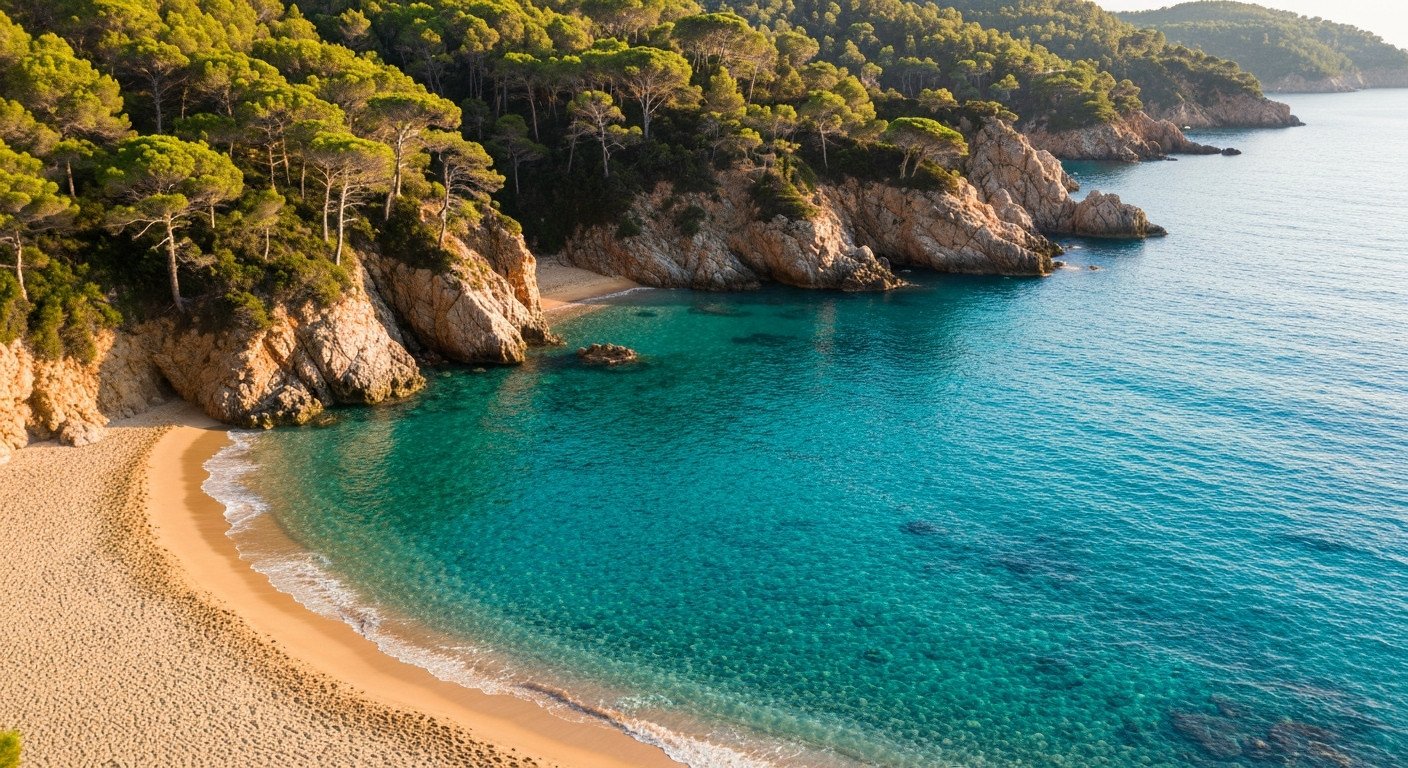
The best hidden beaches on Costa Brava let you swim in crystal-clear turquoise water without fighting for a square meter of sand — and in 2026, knowing exactly which coves to target (and when to arrive) is the difference between a magical day and a disappointing one. While the big resorts like Lloret de Mar draw millions of visitors each summer, a parallel Costa Brava of wild, secret coves remains largely unknown to mass tourism.
Disclosure: This article contains affiliate links. If you book travel through our links, we may earn a small commission at no extra cost to you. This helps keep SpainSoul running.
Why Costa Brava’s Hidden Coves Stay Secret (And How That’s Changing)
Costa Brava — literally “Wild Coast” — stretches 214 kilometres from Blanes to the French border. Of the roughly 300 beaches and coves along this coastline, only a handful grab the lion’s share of tourist attention. The rest? They’re tucked away behind pine forests, often accessible only by boat or arduous hiking trails that most package tourists simply won’t bother with.
According to the Catalan Tourism Agency, Costa Brava welcomed over 11 million overnight visitors in 2024. Roughly 70% of those visitors concentrated in just 15 beach towns, which means the rest of the coastline stays astonishingly quiet. That statistic, if you ask me, is your strategic advantage.
That said, social media is definitely eroding this advantage. Instagram posts of “secret” coves go viral, and suddenly that once-deserted beach shows up in travel reels with hundreds of thousands of views. The key is timing and, honestly, knowing which spots have natural barriers (think steep trails or no road access) that keep the crowds at bay, regardless of their online fame.
Ready to plan your trip? Check out our Spain travel tips guide for practical pre-departure advice, and our best time to visit Spain article to nail your travel window.
The 8 Best Hidden Beaches on Costa Brava to Avoid Crowds in 2026
1. Cala Futadera (Cap de Creus)
Arguably the most beautiful secret cove on the entire Costa Brava, Cala Futadera is a postcard-perfect bay with water so clear it looks artificially filtered. Located within the Cap de Creus Natural Park near Cadaqués, this cove has no road access. You’ll either hike 45 minutes on a rocky trail from the parking area at Port Lligat, or you can arrive by kayak or boat from Cadaqués harbour.
Best time to visit: Weekday mornings in June or late September. What to know: There are no facilities here, so bring everything you’ll need. The trail involves a steep descent — definitely wear sturdy footwear.
2. Cala Pola (Tossa de Mar)
Just 2 kilometres north of Tossa de Mar, Cala Pola sits in a small natural bay fringed with pine trees. You can reach it via a 20-minute walk on the Camí de Ronda coastal path, or by boat from Tossa. Despite its proximity to a popular town, that walk deters most day-trippers. The water here is shallow and calm — it’s excellent for families with young children.
Best time to visit: Try to arrive before 10 AM in July–August. In May and June, you’ll often have it almost entirely to yourself.
3. Platja de Vallpresona (Sant Feliu de Guíxols area)
This wild, nudist-friendly beach is one of the least visited on the entire Costa Brava, which is surprising given its stunning setting. Surrounded by thick Mediterranean scrubland, you’ll reach it via a 30-minute trail from a small, unpaved parking area. The beach is completely natural, with no sunbed rentals, no bar, and no Wi-Fi — and really, that’s exactly the point.
Local tip: The water is particularly calm in the morning before the sea breeze tends to pick up around noon.
4. Cala dels Frares (Lloret de Mar)
Wait — Lloret de Mar? Yep! Despite being Spain’s most visited beach resort town, Lloret hides Cala dels Frares just 1.5 kilometres north of the main beach, accessible only by the coastal path. The contrast is jarring: you’ve got the main beach packed with sunbeds, and then this quiet, rocky cove just minutes away. It’s a perfect reminder that even the most touristy places conceal gems if you’re willing to walk five minutes off the main drag.
5. Cala Marquesa (Roses / Cap de Creus)
This narrow inlet near Roses boasts spectacular red-rock cliffs — the Cap de Creus area is famous for its dramatic ochre and terracotta geology. You can reach Cala Marquesa by a 25-minute walk from the GR-92 trail or by kayak from Roses. The protected waters make snorkelling exceptional; the rocky seabed is home to sea urchins, octopus, and grouper.
6. Cala de la Boadella (Lloret de Mar)
Another Lloret hidden gem, Cala de la Boadella is a naturist beach accessible by a 15-minute trail south from the Lloret promenade. It’s rocky, wild, and wonderfully removed from the main town’s party atmosphere. The cove faces south-west, which means beautiful late-afternoon light that’s perfect for photography.
7. Platja d’en Cogul (Begur)
Begur is often called the most beautiful village on Costa Brava, and its coastline certainly lives up to that billing. Platja d’en Cogul is a small pebble-and-sand cove, about 20 minutes on foot from Begur town. Unlike Begur’s more famous coves (Aiguablava, Sa Riera), this one rarely pops up on tourist itineraries. The hillside pine forest provides natural shade, even in peak summer.
8. Cala sa Boadella (Blanes)
The southernmost entry on our list sits just outside Blanes, the official start of the Costa Brava. This small cove requires a descent down a wooden staircase, which alone keeps the crowds manageable. Overhanging cliffs partially shade the beach, and the water is reliably calm — making it a great first Costa Brava hidden beach for those who aren’t keen on long hikes.
Practical Tips: How to Visit Hidden Beaches Without the Crowds
Strategy matters just as much as knowing the locations. Here’s what separates a peaceful hidden beach day from a crowded one:
- Arrive at dawn or dusk: In July and August, even those “hidden” beaches fill up between 11 AM and 4 PM. Get there before 9 AM or after 5 PM for a completely different experience.
- Go on a weekday: Spanish domestic tourists absolutely flood the coast on weekends from late June through August. A Tuesday in July at a remote cove will be quieter than a Saturday in May at the same spot, trust me.
- Rent a kayak: You can find kayak rentals in Cadaqués, Roses, Palamós, and Begur, typically around €15–€25 per hour. This really unlocks dozens of coves that are completely inaccessible on foot.
- Use the Camí de Ronda: This ancient coastal path runs almost the entire length of Costa Brava. The sections between Begur and Palamós, and between Cadaqués and Port de la Selva, are the most rewarding for discovering hidden coves.
- Travel shoulder season: May, June, September, and early October offer full summer sun with a fraction of the crowds. What’s cool is that the sea temperature in September is actually warmer than in June.
Planning your full Spain itinerary? Our 10-day Spain itinerary guide includes a dedicated Costa Brava day-trip section with transport options.
Getting to Costa Brava: Transport Options in 2026
Costa Brava has no commercial airport — the nearest hubs are Girona-Costa Brava Airport (GRO, 30–60 minutes from most towns) and Barcelona El Prat (BCN, 1.5–2 hours). Ryanair operates cheap flights into Girona from most European cities; in 2025, the average return fare from London was €89 according to Ryanair’s own pricing data.
Renting a car is strongly recommended if you want to reach those hidden beaches. Public bus services (Sarfa/Moventis) connect major towns, but they leave you dependent on timetables that rarely align with those early-morning beach starts. Compare and book flights to Girona or Barcelona to find the best deals for your travel dates.
Once you’re on the ground, car hire from Girona Airport typically runs €30–€60/day in shoulder season and €50–€100/day in peak summer. Book well in advance for July–August, you’ll thank me later.
Costa Brava Beach Safety: What You Need to Know
Hidden beaches carry risks that tourist beaches just don’t. Since there are no lifeguards, no facilities, and often limited mobile signal, personal responsibility is absolutely essential:
- Water safety: Rocky coves can have strong underwater currents, especially after storms. Always check the Catalan sea conditions forecast (meteocat.gencat.cat) before any swimming day.
- Hiking safety: The Camí de Ronda has sections that really demand good balance on rocky terrain. Wear closed-toe shoes, not flip-flops. And seriously, carry 2 litres of water per person minimum.
- Jellyfish: The Mediterranean sees periodic jellyfish blooms, particularly in August. The Meduses app (it’s free, on iOS/Android) provides real-time jellyfish sighting reports for Spanish beaches.
- Mobile signal: Many coves have zero coverage. Make sure to download offline maps (Maps.me or Google Maps offline) before you leave your accommodation.
- Leave no trace: These beaches remain hidden partly because visitors respect them. Carry out all your rubbish, don’t light fires, and please avoid disturbing nesting birds (especially in Cap de Creus Natural Park).
Best Snorkelling at Hidden Costa Brava Coves
The rocky, undisturbed seabed around secret coves makes Costa Brava one of Europe’s top snorkelling destinations. The water visibility can exceed 25 metres on calm days — that’s comparable to some Greek islands! Marine biologists from the University of Girona have documented over 300 fish species in the Cap de Creus Marine Reserve, making it one of the most biodiverse coastal zones in the western Mediterranean.
Top snorkelling coves include Cala Futadera (look for sea caves and grouper), Cala Marquesa (you’ll spot octopus and sea urchins), and Cala Pola (home to protected posidonia seagrass meadows). Bring your own snorkelling gear — rental on hidden beaches is obviously not an option, and hiring in town just adds cost and hassle.
Budget Planning: How Much Does a Hidden Beach Day Cost?
One of the underrated advantages of visiting remote coves is the cost — or frankly, the lack of it. Without beach bars, sunbed rental, or parasol hire, a day at a hidden beach can cost almost nothing beyond transport.
- Car hire fuel: €5–€15 depending on distance
- Parking: Free at most trailheads (just arrive early)
- Food: Pack your own — expect to spend €5–€10 per person for a proper beach picnic from a local supermarket
- Kayak rental (if applicable): €15–€25/hour or €50–€80 full day
- Water taxi (e.g., Cadaqués to Cala Futadera): €10–€15 return
Compare this to the main tourist beaches where a sunbed + parasol costs €20–€35 per day and a beachside cocktail runs €8–€12. Hidden beaches aren’t just more beautiful — they’re dramatically cheaper. For a full breakdown of Spain travel costs, see our Spain travel cost guide.
Frequently Asked Questions About Hidden Beaches on Costa Brava
What are the least crowded beaches in Costa Brava?
The least crowded beaches in Costa Brava include Cala Pola, Cala Futadera, Cala dels Frares, and Platja de Vallpresona. These coves are only accessible by foot or boat, which naturally keeps visitor numbers low.
When is the best time to visit Costa Brava beaches to avoid crowds?
The best time to visit Costa Brava without crowds is May–June or September–October. July and August are peak season with massive tourist influxes, particularly in popular spots like Lloret de Mar and Tossa de Mar.
Are hidden coves in Costa Brava accessible without a boat?
Many hidden coves in Costa Brava are accessible on foot via coastal hiking trails like the GR-92 or Camí de Ronda. Some require a 20–45 minute hike, while others like Cala Futadera are only safely reached by kayak or boat.
Is parking available near hidden beaches in Costa Brava?
Parking near hidden beaches is extremely limited. Most trailheads have small car parks that fill up by 9 AM in summer. Arrive before 8 AM or use public transport from nearby towns like Palamós, Begur, or Roses.
Do I need special permits to visit remote coves in Costa Brava?
No special permits are needed for most coves, though some fall within the Cap de Creus Natural Park where seasonal access restrictions may apply. Check the Generalitat de Catalunya website before visiting between June 15 and September 15.
What should I bring to hidden beaches in Costa Brava?
Bring plenty of water (there are no facilities), sun protection, water shoes (rocky coves), a small first-aid kit, snorkelling gear, and a packed lunch. Most secret coves have no bars, restaurants, or showers.