
Seville Flamenco Show Guide Authentic 2026: Where to Feel the Real Thing
The most authentic flamenco shows in Seville in 2026 are at Casa de la Memoria, Tablao El Arenal, and the intimate spaces of the Triana neighborhood — venues where artists perform for passion and craft rather than for tour buses, where the duende (soul) of true flamenco fills small rooms and the connection between performer and audience is electric, visceral, and real.
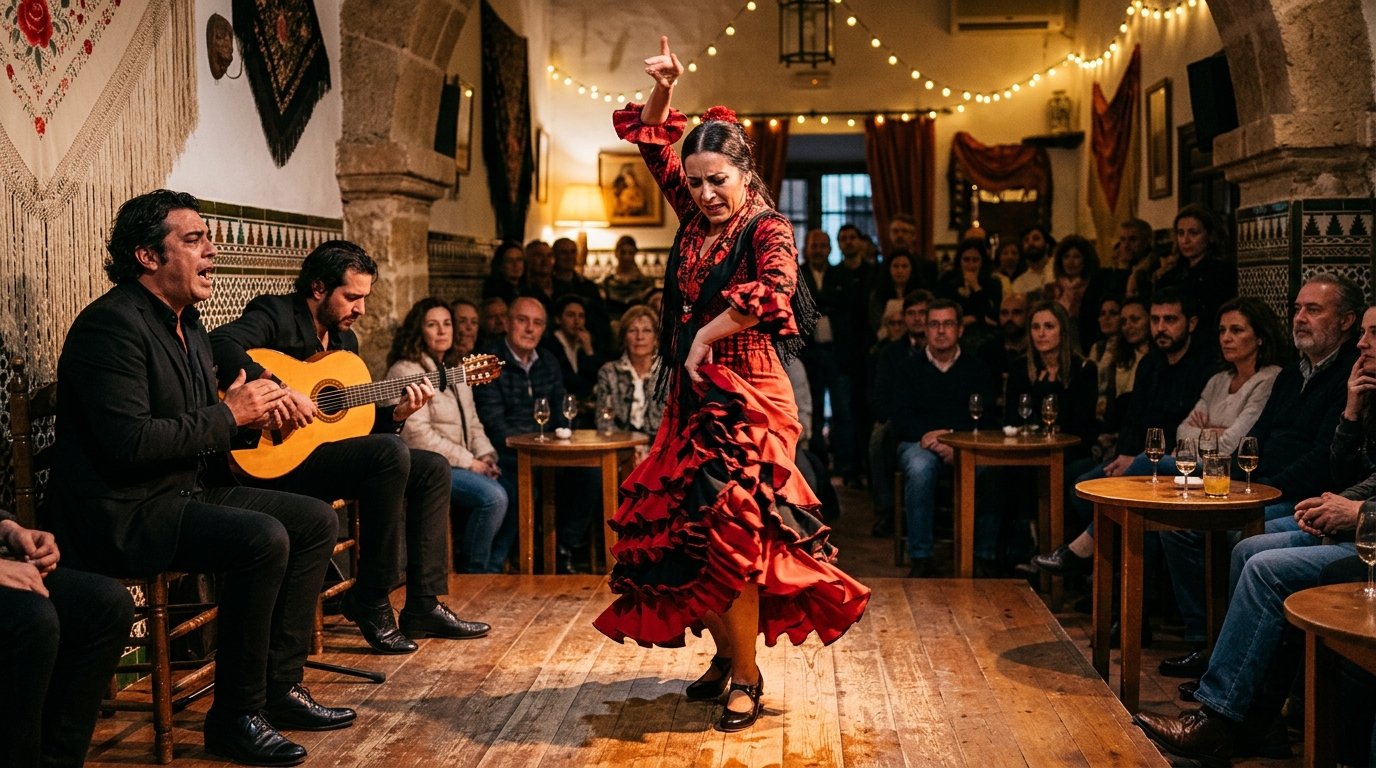
There’s a moment in a great flamenco performance when the room stops breathing. The guitarist’s fingers find a chord that hangs in the air. The dancer’s heel strikes once — hard — and the sound reverberates in your chest. The singer opens their throat and lets out a sound that is equal parts joy and grief, ancient and immediate. That is duende. That is what you come to Seville for. And you will only find it in the right places.
I’ve spent weeks in Seville specifically to understand flamenco — not as a performance you watch, but as a living art form you experience. This guide will take you to the venues where authentic flamenco breathes in 2026, and help you avoid the tourist traps that sell the costume but not the soul.
Key stat: UNESCO inscribed flamenco as an Intangible Cultural Heritage of Humanity in 2010. Today, Seville hosts over 20 dedicated flamenco venues, but only a handful maintain the artistic standards of authentic performance — the rest are primarily commercial operations.
What Makes Flamenco “Authentic” — And Why It Matters
Before choosing a show, you need to understand the distinction that separates an experience from a transaction. Authentic flamenco — what insiders call flamenco puro — is characterized by:
- Small venues (tablaos): Genuine flamenco happens in intimate spaces. The closer the audience, the more powerful the experience. Venues over 200 seats almost always prioritize volume over quality.
- Live music only: Real flamenco uses live guitar (toque), live singing (cante), and live percussion. Any show using recorded backing tracks is not authentic.
- Artists performing their own repertoire: Professional flamenco artists develop personal styles over years of practice. Shows where artists have creative autonomy produce qualitatively different experiences than choreographed spectacles.
- Jondo forms: The deepest flamenco forms — soleá, siguiriyas, bulería — are emotionally intense and technically demanding. They’re less visually accessible than flashier forms but far more powerful. Venues that only perform sevillanas (technically folk dance, not pure flamenco) for tourists are not showing you the real thing.
According to a 2024 survey by the Fundación Cristina Heeren de Arte Flamenco, fewer than 30% of flamenco shows marketed to tourists in Andalusia meet the professional standards considered authentic by practitioners and aficionados.
Best Authentic Flamenco Shows in Seville 2026 — Ranked
1. Casa de la Memoria — Best Intimate Authentic Experience
This is the recommendation I give to every serious visitor. Casa de la Memoria operates in a 16th-century palace courtyard with a maximum capacity of 100 people. The artists change regularly, the programs rotate through different flamenco forms, and the artistic direction prioritizes authenticity over spectacle. The sound of the guitar here — unmiked, acoustic — in a stone courtyard is an experience you cannot manufacture at any price in a larger venue.
Location: Calle Cuna 6, near the Cathedral quarter
Shows: Nightly at 7:30pm and 9pm
Tickets: Approximately €22–€28. Book weeks in advance during peak season (April–May for Semana Santa and Feria, June–September for summer).
Tip: Arrive 15 minutes early to get center seats in the courtyard — the acoustics are better away from the arches at the sides.
2. Tablao El Arenal — Best for Tradition and Grandeur
El Arenal has been running flamenco shows since 1975 in the Arenal neighborhood beside the bullring. It’s larger than Casa de la Memoria (capacity around 150) but maintains strong artistic standards. The company employs full-time professional artists rather than rotating freelancers, which creates a coherent artistic vision. The show includes dinner options — the pairing of genuine Andalusian food with live flamenco is worth the higher price point.
Location: Calle Rodo 7, Arenal district
Shows: Two shows nightly, with and without dinner options
Tickets: Show only approximately €36; dinner + show from €65
Tip: The show-only tickets at the bar get you standing-adjacent seating. For the best experience, book a table in the main hall at least two weeks in advance.
3. Peña Flamenca Cultural Triana — Best for Local Authenticity
This is not a tablao for tourists in the conventional sense — it’s a peña, a members’ flamenco club that opens its doors to visitors on specific evenings. Triana, the working-class neighborhood across the Guadalquivir River, is considered the spiritual birthplace of much of what we call Seville flamenco. The peñas here are where local artists gather, practice, and perform for each other.
Location: Triana neighborhood (various peña addresses — check local listings)
Shows: Check the Asociación Cultural Flamenca de Triana for public-access evenings
Tickets: Often free or suggested donation; some evenings charge €10–€15
Tip: This is a living cultural space, not a polished venue. Go without expectations of production quality and you’ll experience something profound. Go expecting a show and you may be disappointed.
4. Museo del Baile Flamenco — Best for Context and Performance Combined
The Flamenco Dance Museum in the heart of the Santa Cruz barrio is a unique combination: a thoughtfully curated museum about flamenco’s history, regional forms, and key figures during the day, plus nightly shows in their intimate courtyard theater. The artistic level is consistently high, and the programming includes lecture-demonstrations that give context to what you’re watching — invaluable for first-time flamenco audiences.
Location: Calle Manuel Rojas Marcos 3, Santa Cruz
Shows: Nightly at 7pm and 8:45pm
Tickets: Show €25; Museum + Show €30
Tip: Visit the museum before the show — understanding the difference between a bulería and a soleá, and knowing the names of the great historical artists from Seville, makes the performance dramatically richer.
5. Tablao Los Gallos — Best for Spontaneous Late-Night Energy
Los Gallos in Plaza de Santa Cruz has been running since 1966 and has a particular late-night energy that rewards visitors who stay for the second show (10:30pm start). By that point, the artists have warmed up, the earlier tourists have headed to dinner, and the remaining audience tends to be more engaged. What Los Gallos does well is allow moments of spontaneous improvisation — when artists respond to the crowd’s energy — which is the essence of what makes flamenco a living art rather than a rehearsed performance.
Location: Plaza de Santa Cruz 11
Shows: 8pm and 10:30pm nightly
Tickets: Approximately €38 including one drink
Authentic vs. Tourist Flamenco: How to Tell the Difference
As you browse Seville’s flamenco options, here are the key red flags of a commercial tourist show versus genuine artistic performance:
- Red flag: Venue capacity over 200 seats. Why: Flamenco intimacy disappears at scale; venues this large prioritize revenue over artistry.
- Red flag: Promotional emphasis on costume colors and exotic visuals. Why: Real flamenco marketing focuses on artists, not costumes.
- Red flag: Programs that never include soleá, siguiriyas, or other deep jondo forms. Why: Shows made entirely of lighter forms (sevillanas, tangos) are calibrated for accessibility rather than artistic depth.
- Green flag: Named artists with biographical details provided. Authentic venues hire professionals with reputations.
- Green flag: Small venues where the performer-to-audience ratio feels intimate.
- Green flag: Advance booking necessary. Tourist traps never fill up; the best shows always do.
What to Wear to a Flamenco Show in Seville
There is no formal dress code at Seville flamenco venues — you will not be turned away in casual clothes. However, Sevillanos dress with a certain pride, particularly for cultural evenings, and arriving reasonably dressed shows respect for the artform. Think smart casual: a nice shirt or blouse, clean trousers or a skirt. Avoid shorts and flip-flops at genuine tablaos — not because of rules, but because of atmosphere. You’re entering an art space, not a beach bar.
For women visiting during Feria (Seville’s April Fair), wearing a traje de flamenca (the traditional ruffled dress) is absolutely celebrated and warmly received. Outside Feria, it’s unusual but not unwelcome. The key thing is that whatever you wear, you feel comfortable enough to lose yourself in the music — because the best flamenco demands your complete attention.
Where to Eat Before Your Flamenco Show
An evening flamenco show in Seville is ideally preceded by a long, unhurried dinner in the Triana neighborhood or the old Santa Cruz barrio. Here are three restaurants where you can eat extraordinarily well without the tourist markup:
- Bar Las Golondrinas, Triana: Standing-room tapas bar with the finest pescaíto frito (fried fish) in the city. The gambas al ajillo here are transcendent. No reservations, cash only, perpetually crowded. Go at 8pm sharp for a seat.
- Bodega Santa Cruz (Las Columnas), Santa Cruz: Beloved by locals for decades, this bar does traditional tapas at honest prices steps from Casa de la Memoria. The montaditos (small open sandwiches) and cold fino sherry are the perfect pre-show ritual.
- El Rinconcillo (est. 1670), Alfalfa: The oldest bar in Seville. Atmospheric to the point of feeling unreal, with hanging hams, marble bar tops, and a kitchen that has changed very little in 350 years. The spinach with chickpeas (espinacas con garbanzos) is a Sevillano classic and one of the best dishes in the city.
Planning Your Flamenco Evening: Practical Timeline
For an ideal Seville flamenco evening, work backward from your show time:
- 5:00pm: Explore the Santa Cruz barrio or Triana on foot. Seville’s evening light at this hour is extraordinary.
- 7:00pm: Aperitivo — a glass of manzanilla or fino sherry with olives at a traditional bar. This is not tourist behavior; this is what Sevillanos do.
- 8:00pm: Dinner. Take your time. No rushing.
- 9:30pm: Walk to the venue. Arrive 15 minutes before curtain.
- 10:00pm: Show begins. Switch off your phone. Be present.
- After: Most shows run 60–75 minutes. Afterward, the night is young by Seville standards — tapas bars are still busy until midnight and beyond.
Ready to secure your spot at one of Seville’s best shows? Book a Seville flamenco show in advance — the best seats disappear weeks before the date, especially during Semana Santa and Feria season.
Frequently Asked Questions
What is the best flamenco show in Seville for first-timers?
Casa de la Memoria is consistently recommended for first-time visitors who want authentic flamenco in an intimate setting. The Museo del Baile Flamenco is excellent if you also want historical context. Both are far superior to larger commercial venues for genuine artistic experience.
How much does a flamenco show in Seville cost?
Authentic venues charge between €22 and €45 for show-only tickets. Dinner + show packages at venues like El Arenal run €60–€80. Be suspicious of shows under €15 — at that price point, artistic quality is rarely maintained.
Should I book flamenco shows in advance in Seville?
Yes, especially for Casa de la Memoria (which has only 100 seats) and during peak periods: Semana Santa (March/April), Feria de Abril (April/May), and the summer months of June through September. Booking 1–3 weeks in advance is advisable; more for the best shows during festivals.
Is flamenco in Seville different from Madrid or Granada?
Yes, significantly. Seville’s flamenco tradition emphasizes the cante jondo (deep song) and the guitar traditions of Triana and the historic gitano communities. Madrid’s flamenco scene is more cosmopolitan and eclectic. Granada has its own cave-flamenco culture (zambra). Each is worth experiencing, but Seville is considered the heartland of the art form.
Are flamenco shows appropriate for children?
Yes, generally. Flamenco is a family art form in Andalusia. The intense emotion may be overwhelming for very young children (under 5), but school-age children and above typically find flamenco fascinating and memorable. Evening show times (9–10pm) may be late for young children; check if afternoon shows are available.
Can I take photos during a flamenco show in Seville?
Most venues prohibit flash photography and video recording during performances. Some allow discreet phone photography. The cultural expectation — and the polite practice — is to put the phone away and be fully present. You cannot capture what makes flamenco special on a phone screen, and trying to do so diminishes the experience for you and everyone around you.