
Spain 7 Day Itinerary First Time: 2026 Route Guide
Spain 7 Day Itinerary First Time: 2026 Route Guide: A Spain 7 day itinerary first time visitors can actually finish is a one-week travel plan that covers two or three flagship Spanish cities with the minimum amount of time lost to transport. This means you arrive somewhere on Day 1, spend two or three nights in each base city, use high-speed AVE trains or short flights to move, and leave from a different airport than you flew into. This “open-jaw” strategy is critical for maximizing your limited time. Barcelona vs Madrid: Which Spanish City Should You Visit
Spain 7 day itinerary first time guide. Last updated: 2026-05-12 by Maria Santos. Barcelona vs Madrid – Which City Is Better to Visit
This Spain 7 day itinerary first time guide gives you a practical, route-by-route plan for a single week in Spain in 2026, with honest transport costs, an itemised budget table, and 2026 entry rules. Planning a week in Spain requires strategic choices because the country offers an embarrassment of riches. From the art-filled halls of Madrid to the Moorish architecture of Seville and the modernist wonders of Barcelona, deciding where to go is the hardest part. Affiliate disclosure: some links go to booking partners (Trip.com, Booking.com, GetYourGuide). If you book through them, spainsoul.com may earn a small commission at no extra cost. Recommendations are based on reader fit, not commission. Is Barcelona Safe at Night – A Local Guide to Safety
TL;DR
- A first-time Spain 7 day itinerary works best with two or three cities, not four. The honest answer to “Madrid, Barcelona, Seville in a week” is: pick three, skip one, or accept long train days.
- The most balanced first-timer route in 2026 is Madrid (3 nights), then AVE south to Seville (3 nights), then fly north to Barcelona (1 night before your return flight). This avoids Barcelona-to-Seville backtracking.
- A second strong option swaps Barcelona for Granada: Madrid, Seville, Granada keeps all transit under 3 hours by train and saves about €120 per person on flights.
- Mid-range budget for one week is roughly €1,000 to €1,700 per person, excluding international flights, based on benchmark budget data for Spain.
- Late April to mid-June and September to mid-October are the best windows: warm enough for terrace dinners, no extreme Andalusian heat, smaller queues at the Alhambra and Sagrada Familia.
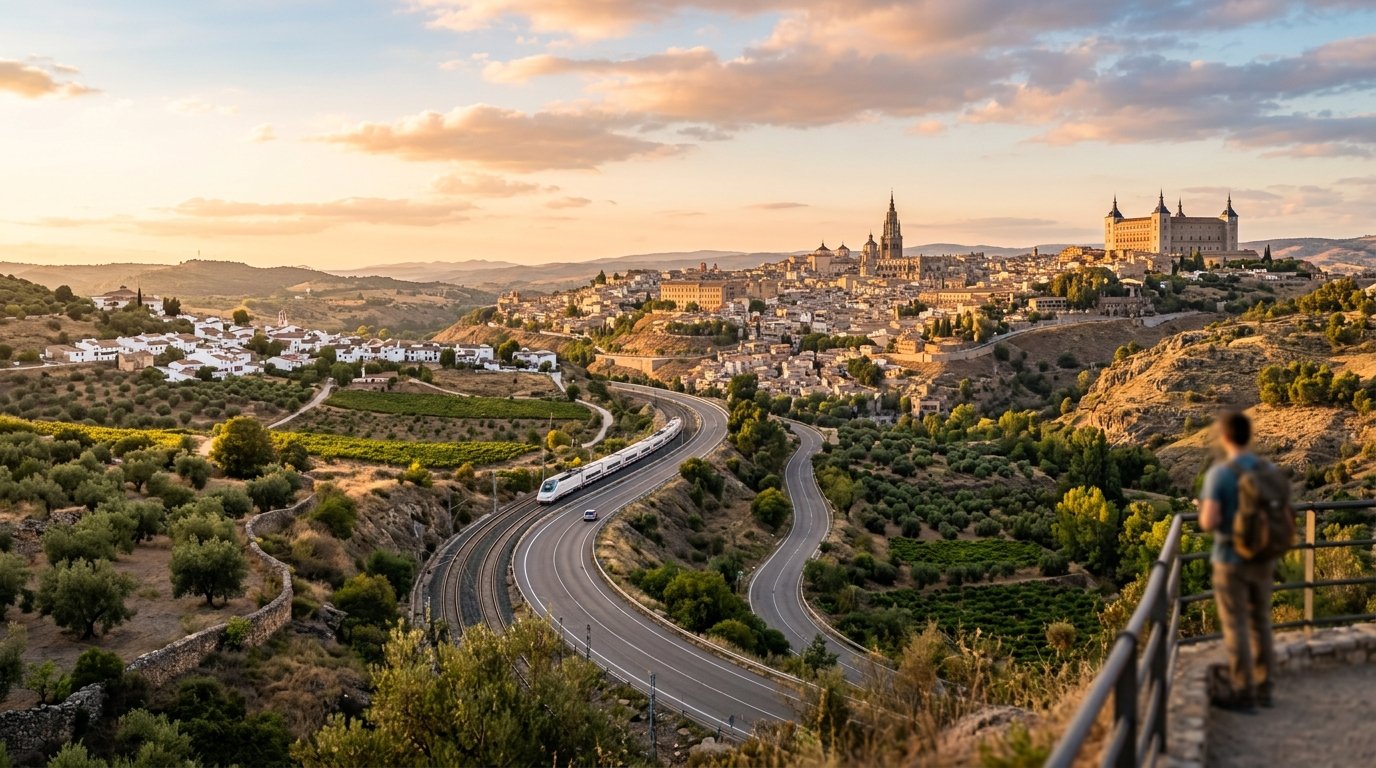
What is a Spain 7 day itinerary first time travellers can actually finish?
A Spain 7 day itinerary first time visitors can actually finish is a one-week travel plan that covers two or three flagship Spanish cities with the minimum amount of time lost to transport. This means you arrive somewhere on Day 1, spend two or three nights in each base city, use high-speed AVE trains or short flights to move, and leave from a different airport than you flew into. This strategy, known as an open-jaw flight itinerary, saves valuable hours by eliminating the need to return to your starting point. Best Cities to Visit in Spain 2026: Barcelona, Seville, Granada
The reason matters: Spain is geographically larger than many realize. From Madrid to Barcelona is 2 hours 30 minutes by AVE. From Madrid to Seville is 2 hours 30 minutes by AVE. However, from Barcelona to Seville is nearly 6 hours by train. Trying to draw a triangle through all three in seven days means giving up almost a full day to transit between Seville and Barcelona. First-timers who want to walk neighbourhoods, sit in plazas, and eat unhurried lunches do better with two long bases plus one shorter stop.
In 2026, booking windows for major attractions like the Alhambra or Sagrada Familia open 3 to 4 months in advance. A realistic itinerary accounts for these reservations rather than hoping for walk-in availability. Rushing through four cities in seven days often results in seeing train stations rather than tapas bars. Sustainability in travel also means reducing carbon footprints where possible; prioritizing train travel over domestic flights when feasible is encouraged, though sometimes necessary for time savings. For 2026, ensure your passport has at least six months validity beyond your planned departure date from the Schengen area.
Which Spain 7-day route works best on a first time visit?
The best Spain 7-day route for first-timers in 2026 is Madrid (3 nights), Seville (3 nights), then a single night in Barcelona before flying home. This means you cover the political and cultural capital, the heart of Andalusia, and the Mediterranean modernist icon, with only one in-country flight and zero backtracking. This route maximizes cultural diversity, offering royal history, Moorish influence, and Gaudi’s architecture in a single week. (source: U.S. travel advisories)
The second strongest option drops Barcelona and adds Granada instead: Madrid (3 nights), Seville (2 nights), Granada (2 nights). This is the more sensory week. It is also cheaper, since all three cities link by train in under 3 hours and you can skip a domestic flight. The trade-off: no Sagrada Familia, no Park Güell, no Mediterranean terrace evening. However, the Alhambra Palace in Granada is often considered the pinnacle of Islamic art in Europe, making it a worthy substitute for coastal Catalonia. (source: EU tourism statistics)
Here is a clean comparison of the two routes side by side.
| Route | Cities | Total transit time | Flights inside Spain | Best for |
|---|---|---|---|---|
| Route A (most popular) | Madrid + Seville + Barcelona | About 5 hrs (2 AVE + 1 flight) | 1 (Seville to Barcelona) | First-timers who want the three “icon” cities |
| Route B (calmer) | Madrid + Seville + Granada | About 5 hrs 30 mins (3 AVE) | 0 | Slower travel, Andalusian focus, lower cost |
| Route C (less recommended) | Madrid + Barcelona + Seville triangle | 8 hrs+ transit if you keep all three | 1 or long train day | Travellers who insist on all three and accept transit loss |
The third option is the one most travellers think they want, until they look at the map. Spain’s golden triangle works far better across 10 to 12 days. For seven nights, two bases plus one anchor city is the format that returns the most actual time in plazas, on terraces, and inside museums. Budget-conscious travelers should note that Route B can save approximately €150 per person by avoiding domestic airfare, though train tickets should be booked 60 days in advance for the best rates.
If you cannot decide between the two cultural anchors, our Barcelona vs Madrid comparison breaks down the personality differences in detail.

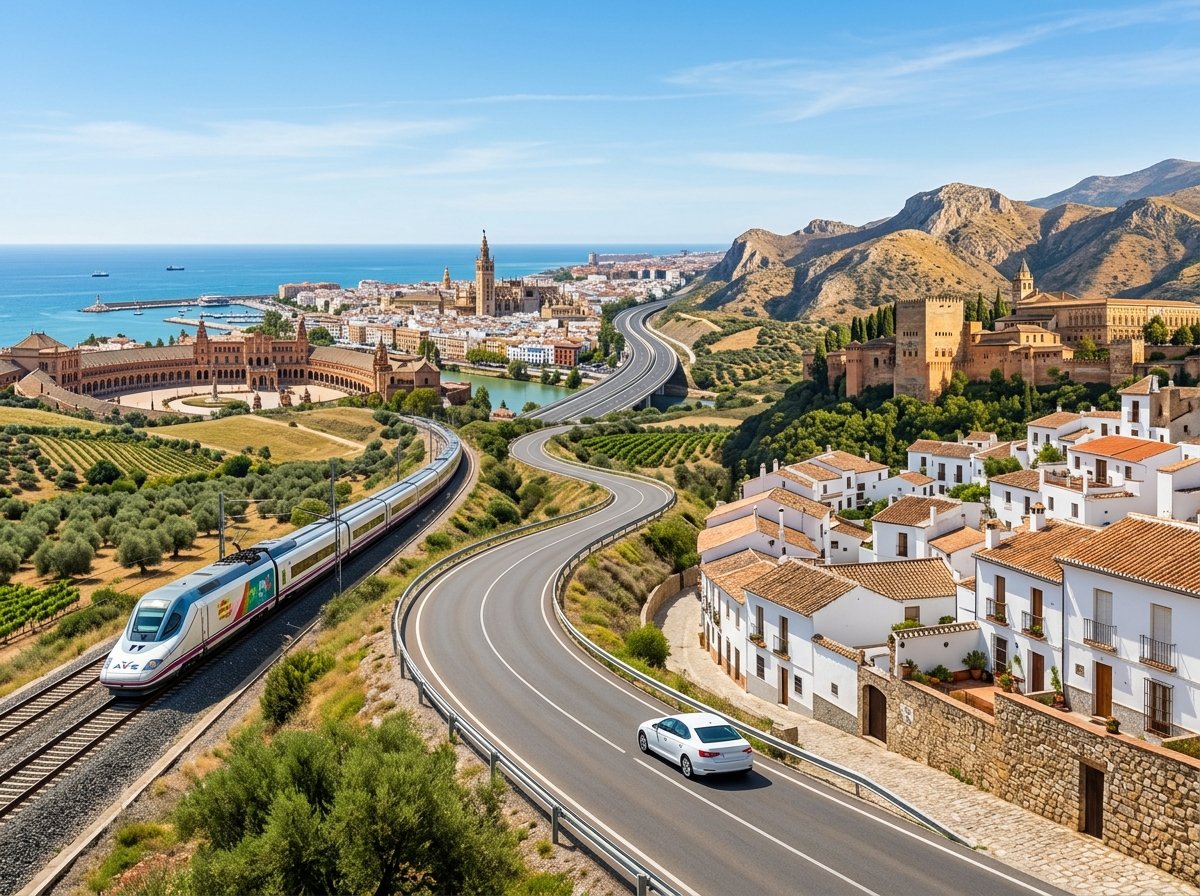
How do you execute the Madrid, Seville, Barcelona 7-day route day by day?
This is the day-by-day version of Route A. It assumes you fly into Madrid (MAD) and out of Barcelona (BCN), with one internal flight from Seville (SVQ) to Barcelona on Day 6 evening. This schedule balances sightseeing with necessary transit time.
Day 1: Arrive in Madrid
Land at Madrid-Barajas. From the airport, take the metro Line 8 to Nuevos Ministerios then change for the city centre, or splurge on a fixed-rate taxi to your barrio (around €33 from the airport to central Madrid). Check into your hotel in Sol, Gran Vía, or Huertas. Spend the evening easing into the rhythm with a late dinner at a traditional taberna. Try cocido madrileño or jamón ibérico.
Day 2: Madrid Art and Royalty
Dedicate your morning to the Prado Museum or the Reina Sofía, depending on whether you prefer classical masters or modern art like Picasso’s Guernica. In the afternoon, walk through the Royal Palace gardens and grab churros at San Ginés. Evening tapas hopping in La Latina is essential for experiencing local nightlife. Budget approximately €50 for museum entries and food.
Day 3: High-Speed Train to Seville
Take the morning AVE train from Madrid Puerta de Atocha to Seville Santa Justa. The journey takes exactly 2 hours and 30 minutes. Upon arrival, drop your bags and head straight to the Plaza de España. In the evening, explore the narrow streets of the Santa Cruz quarter. Dinner should be tapas-focused; try salmorejo or Iberian pork.
Day 4: Seville’s Moorish Heart
Morning is reserved for the Real Alcázar. You must book tickets weeks in advance for the 2026 season. Afterward, visit the Seville Cathedral and climb the Giralda tower. Spend the afternoon shopping in the trendy Alameda de Hércules area or relaxing by the Guadalquivir river.
Day 5: Flamenco and Triana
Cross the river to the Triana neighbourhood, the birthplace of flamenco. Visit the local market for lunch. In the evening, attend an authentic flamenco show in a small tablao rather than a large theatre. This is your final full day in Andalusia, so savour the slow pace.
Day 6: Fly to Barcelona
Take a morning flight from Seville (SVQ) to Barcelona (BCN). Flight time is roughly 1 hour 45 minutes. Check into your hotel in the Eixample or Gothic Quarter. Spend the afternoon walking down Las Ramblas and exploring the Boqueria Market. Have a farewell dinner featuring seafood paella near the Barceloneta beach.
Day 7: Gaudi and Departure
Start early at the Sagrada Familia. Even with a 7-day limit, this masterpiece is non-negotiable. If time permits before your flight, take a quick taxi to Park Güell for panoramic city views. Head to Barcelona El Prat airport for your international departure.
What is the estimated budget for a Spain 7 day itinerary in 2026?
Planning your finances is as important as planning your route. For a mid-range experience in 2026, expect to spend between €1,000 and €1,700 per person, excluding international airfare. This estimate covers 3-star to 4-star accommodation, high-speed train tickets, one