
Traditional Spanish Dishes To Try 2026: Complete Guide
Traditional Spanish Dishes To Try 2026: Complete Guide: Authentic Spanish cuisine is not merely a collection of recipes; it is a living, breathing philosophy rooted in terroir, history, and a profound culture of sharing. As we look toward 2026, the culinary landscape of Spain continues to evolve while fiercely protecting its heritage. It stands apart from other European traditions by celebrating the inherent quality of raw materials over complex manipulation. Whether you are planning a gastronomic tour of the north or a sun-soaked getaway in the south, understanding the food is understanding the soul of the nation. The shift towards sustainable tourism in 2026 means travelers are more eager than ever to connect with local producers and traditional methods. From the vineyards of Rioja to the fishing ports of Costa del Sol, every bite tells a story of resilience and celebration. Barcelona vs Madrid – Which City Is Better to Visit
To authentically experience Spain in 2026, you must dive into its traditional cuisine, a vibrant tapestry of regional flavors, timeless techniques, and communal rituals that define the nation’s soul far beyond clichés. From the misty coastlines of Galicia to the arid plains of Castilla, every region offers a unique narrative on the plate. Travelers seeking depth should look past the tourist traps and engage with the local markets where the day’s catch is sold directly from the boat. This guide serves as your compass for navigating the diverse flavors that await, ensuring every meal contributes to a deeper understanding of Spanish culture. Prioritizing seasonal ingredients ensures that your culinary journey aligns with the natural rhythms of the land, offering the freshest tastes possible. Hidden Gems in Barcelona Most Tourists Miss in 2026
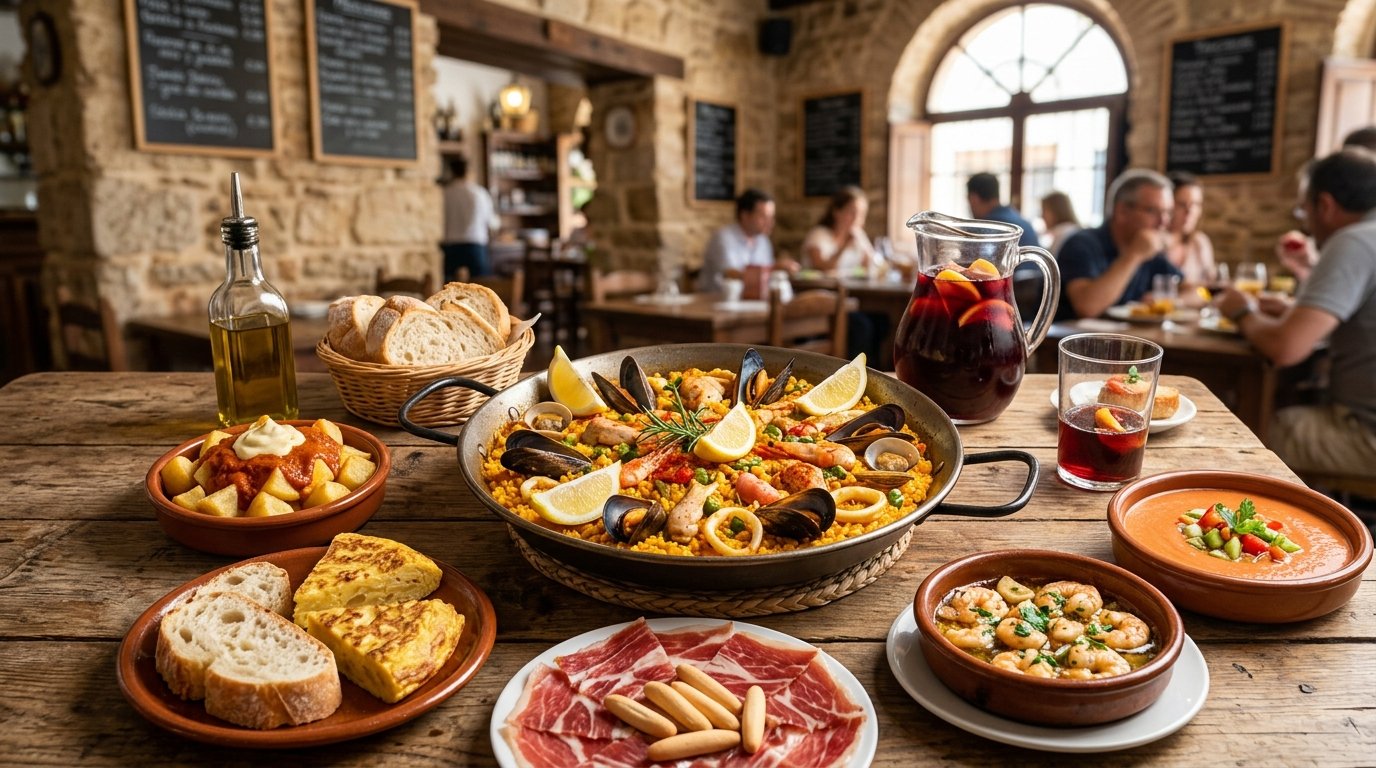
What Is the True Philosophy of Spanish Food?
Authentic Spanish cuisine is built on a foundation of respect for the ingredient. It is a philosophy rooted in terroir, history, and a profound culture of sharing. Recognized by UNESCO as an Intangible Cultural Heritage of Humanity, the Mediterranean Diet as practiced in Spain emphasizes seasonality and locality. It stands apart from other European traditions by celebrating the inherent quality of raw materials over complex manipulation. This culinary ethos is built on three pillars: exceptional ingredients, a unique sense of time, and the primacy of community. From the seafood-centric rías of Galicia to the olive groves of Andalusia and the vegetable gardens of Valencia, Spain’s diverse geography directly dictates its pantry. The country’s 17 autonomous communities each guard distinct culinary identities forged over centuries, from Moorish influences in the south to French touches in the north. Barcelona vs Madrid: Which Spanish City Should You Visit
The unity lies in foundational techniques. The sofrito—a slowly coaxed mixture of onion, garlic, and tomato in olive oil—is the aromatic heart of countless dishes, a technique perfected over generations. Spanish extra virgin olive oil, with over 200 varieties, is a fundamental ingredient, not just a medium. The peppery Picual from Jaén, the fruity Arbequina from Catalonia, and the balanced Hojiblanca each impart a distinct character. The rhythm of the Spanish day, centered on the leisurely, multi-course comida (lunch) between 2:00 and 4:00 PM, dictates not just what is eaten, but how and with whom. Food is the central pillar of social life, a daily ritual of connection. Understanding this philosophy—that a simple plate of pimientos de Padrón or a meticulously crafted cocido carries the weight of place and tradition—is essential to appreciating every bite you will take in 2026. Toledo Spain Day Trip from Madrid 2026: The Complete Guide
How Do You Navigate the World of Tapas Like a Local?

Tapas represent Spain’s most democratic and social culinary institution, a practice believed to have originated in using a slice of bread or ham to cover (tapar) a drink to keep flies out. Today, it has evolved into a sophisticated gastronomic ritual. True tapas culture, or el tapeo, involves moving from bar to bar, standing at the counter, enjoying a small plate and a drink, and engaging in lively conversation. It’s a movable feast and a core social activity. The format varies regionally: a tapa is a small, often complimentary bite; a ración is a larger share plate intended for the table; and in the north, pintxos are elaborate, often skewered creations served on bread. In 2026, expect a resurgence of classic bars focusing on high-quality ingredients rather than fusion experiments.
To navigate like a local in 2026, follow these rules: Seek out crowded bars with a noisy, standing-room-only atmosphere and handwritten menus on chalkboards. Do not expect table service at peak times; order confidently at the bar. In cities like Granada, León, or Salamanca, a drink often still comes with a free tapa chosen by the bartender—a glorious tradition to prioritize. In the Basque Country, you typically serve yourself from the dazzling array of pintxos on the counter, saving the toothpicks for the bill. The key is engagement, exploration, and embracing the informal, communal spirit. Remember that tipping is not mandatory but leaving small change is appreciated for good service. Pair your tapas with a caña (small beer), a glass of vermut, or a dry Sherry from Jerez for the full experience.
Patatas Bravas: The Litmus Test of a Tapas Bar
These crispy fried potato cubes are a universal staple, but their quality is a direct indicator of a bar’s standards. An exemplary version uses starchy potatoes like Kennebec or Agria, fried twice at precise temperatures for a crackling exterior and fluffy interior. The true differentiator is the salsa brava. An authentic sauce derives its deep brick-red color and subtle smokiness from Pimentón de la Vera, a smoked paprika with Protected Designation of Origin (D.O.P.) status from Extremadura, not from generic chili powder. In Madrid, the sauce is typically spicy and tomato-based; in Barcelona, it’s often served with a side of garlic alioli. A plate of soggy, pre-fried potatoes under a heat lamp is a clear sign to move to the next establishment.
Tortilla Española: The National Omelette and Its Great Debate
More than a dish, the Spanish omelette is a cultural icon and a source of friendly, enduring national debate. At its core, it is a deceptively simple combination of eggs, potatoes, olive oil, and, controversially, onion. La polémica, the onion debate, genuinely divides the nation. Purists, including the renowned Spanish Royal Academy of Gastronomy, argue for purity, while many chefs and home cooks champion the sweet depth onion provides. The true marker of quality is texture: a perfect tortilla must be jugosa, with a slightly runny, creamy, almost custardy center when cut. A dry, overcooked wedge indicates it was made hours in advance. In 2026, seek out bars that cook them to order, often listed as “tortilla de pincho” (a small, individual portion) or “tortilla al momento”.
Jamón Ibérico: Decoding the World’s Finest Cured Ham
Spain’s cured ham operates on a strict, legally defined hierarchy based on the breed of pig and its diet. Understanding the labels is non-negotiable for appreciating value and quality. The color of the label tells the story:
- Black Label (Jamón Ibérico de Bellota): The pinnacle. From 100% Iberian-breed pigs fattened exclusively on acorns (bellotas) during the montanera season. The fat is marbled and melts at room temperature.
- Red Label (Jamón Ibérico de Cebo de Campo): From Iberian pigs raised outdoors with a diet combining acorns and feed.
- Green Label (Jamón Ibérico de Cebo): From Iberian pigs raised on a diet of commercial feed.
- White Label (Jamón Serrano): From white landrace pigs, cured for a minimum of 7 months. It is savory, affordable, and perfect for everyday use.
A prime leg cures for 36 to 48 months and can command prices over €1,200. Always have it sliced paper-thin by hand with a long, flexible knife, never pre-packaged.
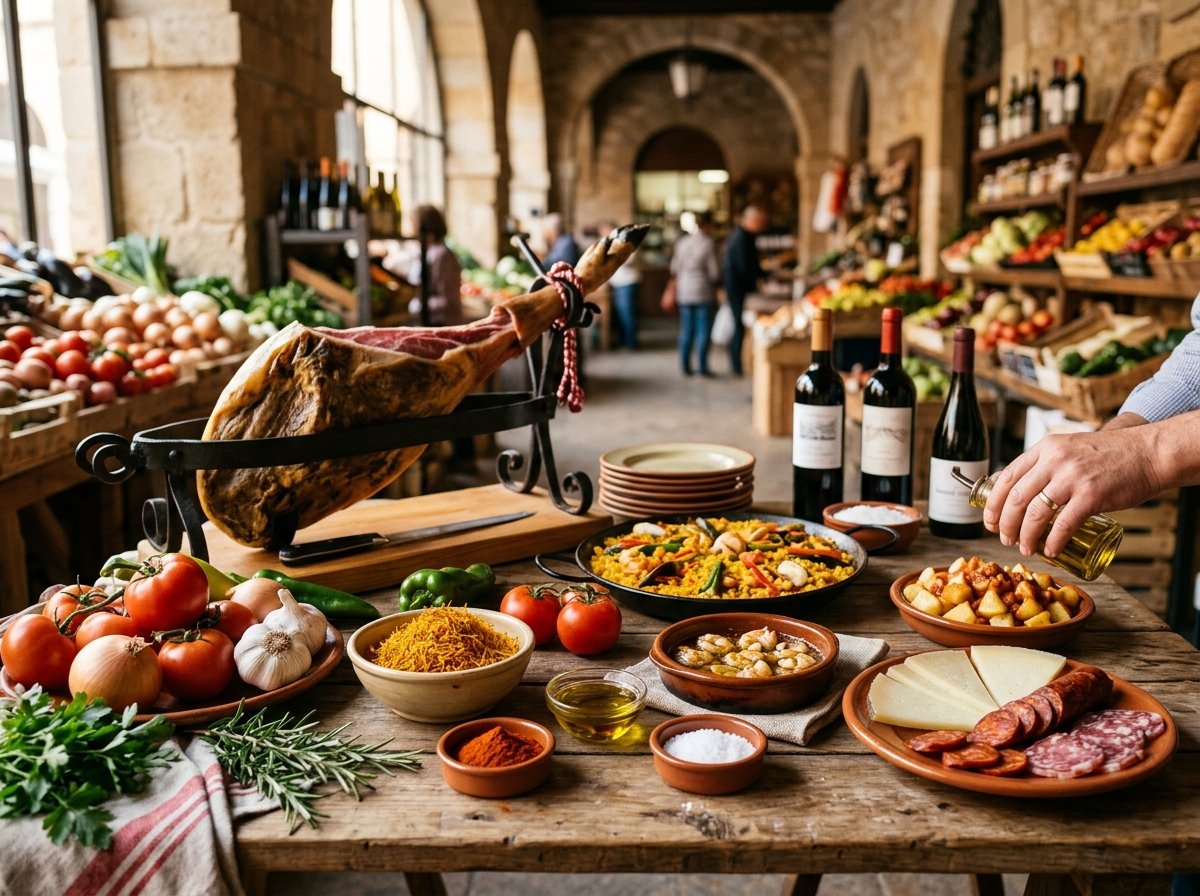
Which Regional Dishes Demand a Culinary Pilgrimage in 2026?
Spain’s deepest culinary treasures are hyper-regional, often impossible to replicate outside their specific microclimates. A dedicated food journey in 2026 should be built around these iconic dishes, each a masterpiece of its local environment and history. Planning your trip around harvest seasons or local festivals can enhance the experience significantly. Whether you are traveling by high-speed rail or renting a car to explore rural villages, prioritizing these dishes ensures an authentic connection to the land.
Paella Valenciana: Reclaiming the Authentic from the Tourist Cliché

Globally famous yet widely misunderstood, authentic Paella Valenciana is a rural dish from the huerta (market garden) surrounding Valencia. Governed by an official regulatory council since 2021, its traditional ingredients are specific and non-negotiable: chicken, rabbit, flat green beans (ferraura), butter beans (garrofó), tomato, saffron, rosemary, water, olive oil, and the short-grain rice varieties of Bomba or Albufera. It never contains seafood, chorizo, or peas. The prized element is the socarrat, the caramelized, crispy layer of rice at the bottom of the wide, shallow pan, achieved through precise heat control. For the true experience in 2026, visit the Albufera Natural Park villages like El Palmar for a weekend lunch, always sharing the pan directly. A superb seafood alternative is fideuà, a similar dish from the coast made with short noodles that excel at absorbing rich fish and crustacean broths.
Pulpo a la Gallega: Galicia’s Minimalist Octopus Perfection
From Spain’s misty, rugged northwest, this dish showcases supreme-quality Atlantic octopus (Polbo) through flawless, time-honored technique. The octopus is traditionally “scared” (asustar) by dipping it three times in boiling copper pot water to curl the tentacles, then simmered until tender but never rubbery—a process that can take over an hour. It is sliced into coins, dressed only with high-quality olive oil, coarse Atlantic sea salt, and sweet pimentón dulce (smoked paprika). Served on a wooden plate, its beauty is in its stark simplicity and the quality of its single star ingredient. For the ultimate taste, visit a pulpería in the Ribeira Sacra region or the bustling food stalls of Santiago de Compostela’s Mercado de Abastos.
Cocido Madrileño: Madrid’s Three-Act Culinary Spectacle
Born on the cold, high plains of the Meseta Central, this hearty chickpea stew is a lesson in resourcefulness and ceremony. A single simmering pot yields three sequential courses, known as los tres vuelcos. First, the rich broth is served with fine noodles or rice. Second, the chickpeas and seasonal vegetables such as cabbage, carrots, and turnips are presented. Finally, the assorted meats—including beef shank, pork belly, chorizo, and morcilla blood sausage—are served as the main course. It is the ultimate comfort food for winter visits, traditionally eaten on Sundays when families gather for extended meals. The dish exemplifies the Spanish ability to transform humble ingredients into a luxurious experience through time and patience.
Frequently Asked Questions About Spanish Cuisine
Planning a culinary trip involves many logistical questions. Here are answers to common queries to help you prepare for your 2026 gastronomic adventure.
What is the best time to eat dinner in Spain?
Dinner times in Spain are notably later than in most other countries. Restaurants typically open for dinner service around 8:30 PM, but locals rarely arrive before 9:30 PM. Peak dining hours are between 10:00 PM and 11:00 PM. Arriving too early may result in dining alone or finding the kitchen closed. It is advisable to make reservations, especially for popular venues in major cities.
Is tapas enough for a full dinner?
Yes, absolutely. Ordering several raciones (larger share plates) is a common way to construct a full meal. By sharing three or four different dishes among a group, you can experience a wider variety of flavors than a standard three-course menu allows. It is also more social and aligned with local customs. This method allows you to sample multiple Traditional Spanish Dishes To Try 2026 without committing to a single large entrée.
What drink pairs best with Paella?
While sangria is popular among tourists, locals typically pair paella with dry white wine or beer. A crisp Albariño from Galicia or a local white from Valencia complements the saffron and seafood without overpowering the delicate rice. Red wine is generally reserved for meat dishes like Cocido or Ibérico ham. For a non-alcoholic option, sparkling water with lemon is a common table accompaniment.
Are there vegetarian options in traditional Spanish cuisine?
Yes, though meat and seafood are prominent. Many traditional dishes are naturally vegetarian, such as Espinacas con Garbanzos (spinach with chickpeas) from Seville, Pisto