
Ibiza Travel Guide 2026: The Honest Local Truth
The honest answer about Ibiza in 2026 is that it is effectively two completely different islands occupying the same geography. The version you experience depends almost entirely on when you arrive and where you base yourself. This Ibiza travel guide 2026 is written to help you choose on purpose rather than by accident, because the difference between a stressful resort holiday and one of the best Mediterranean trips of your life often comes down to a few informed decisions made before you pack your bag. Understanding the dichotomy between the party capital and the UNESCO-protected natural reserve is the first step to planning a successful trip.
A friend recently spent four nights in San Antonio in July and came home saying Ibiza was overrated and overcrowded. I sent her back in May, told her exactly where to go, and she now describes the same island as if she had discovered a secret. She did not discover a new island; she just went at the right time, to the right places. That gap between the party version of Ibiza and the authentic version is what this guide is here to close. Whether you seek world-class nightlife or silent coves, knowing the layout of the island is crucial for your budget and sanity. With tourism evolving rapidly, 2026 presents a unique window where sustainability measures are reshaping the visitor experience.
Written by Maria Santos, Spain travel writer based in Barcelona with eight years covering the Balearic Islands. Last updated June 2026.
Quick Answer: Ibiza in 2026 is far more than a party destination. Visit in April, May, September, or October for the authentic island experience: the UNESCO walled city of Dalt Vila, quiet coves like Cala d’Hort and Cala Conta, the bohemian village of Santa Gertrudis, and easy access to pristine Formentera. Avoid the west coast resorts in August if you prefer tranquility.
What Is Ibiza Really Like in 2026?
Ibiza is a Balearic island off Spain’s eastern coast, roughly 220 square miles in size, with a permanent population of around 150,000 that swells past 300,000 in summer. Its world-famous club scene is real, but it is geographically concentrated in a small fraction of the island: the west coast around San Antonio and the strip near Playa d’en Bossa. Drive ten minutes inland from those areas and you are among pine forests, almond groves, and white farmhouses with the sea nowhere in sight. This geographical separation is key to understanding the island’s dual identity.
The clubbing Ibiza and the peaceful Ibiza barely overlap. They occupy different months and different corners of the island. You can have either holiday. The problem is that most first-timers do not realise this until they have already booked the wrong base in the wrong month. Transport is another key factor; while public buses exist, renting a car is highly recommended for 2026 to access remote coves efficiently, though parking becomes challenging in July and August. Scooter rentals are popular but require caution on winding inland roads, especially for those unfamiliar with Mediterranean driving styles.
What has changed heading into 2026: the Balearic government has tightened sustainability regulations, including attendance caps on large-scale events and expanded protection zones for the island’s Posidonia seagrass meadows, which are a UNESCO World Heritage feature in their own right alongside the walled city of Dalt Vila. The Balearic Eco-Tax, which funds conservation projects, applies to all overnight stays and currently runs to approximately 4.40 euros per person per night in standard accommodation. These are not just administrative details; they signal an island actively trying to manage the tension between its tourism economy and its natural identity. Visitors should respect these zones, as anchoring over Posidonia is strictly prohibited and heavily fined.
Tourism to the Balearic Islands reached record numbers in recent years, with Ibiza alone receiving an estimated 8 million visitors annually according to regional government data. That number drops sharply outside the June-to-September window, which is exactly why the shoulder seasons feel so different from peak summer. The infrastructure that serves 300,000 people simply has far less pressure on it when most tourists are gone. Visitors should also note that cash is less commonly accepted than in previous years, with most establishments preferring card payments for even small amounts. Contactless payment is now the standard across the island.
Where Should You Go in Ibiza Beyond the Clubs?
The best parts of Ibiza are not the famous ones. They are the places that take ten minutes more effort to reach. Here is where to spend your time if you want to see the island the way people who live here actually see it. Focusing on the north and east coasts will yield a dramatically different experience than the busy west. Prioritizing nature and culture over nightlife will unlock the true magic of the Balearics.
Dalt Vila: The Old Town Above the Harbour
Dalt Vila is the walled medieval city rising above Ibiza Town’s harbour. It earned UNESCO World Heritage status in 1999 alongside the island’s remarkable Posidonia seagrass ecosystem. You enter through stone Renaissance gates, climb cobbled lanes past whitewashed houses and small art galleries, and arrive at a castle with views across the Mediterranean that make conversation stop. Go in the late afternoon when the light softens and the day visitors thin out. Walk the fortification ramparts as the harbour lights begin to come on. This is the single thing to prioritise on any Ibiza trip regardless of what else you have planned. Entry to the cathedral museum requires a ticket, but wandering the streets is free.
Formentera: The Sister Island Worth the Ferry
A 30-to-35-minute ferry from Ibiza Town drops you on Formentera, the smallest and least developed of the Balearic Islands. The water visibility here reaches 50 metres in places, among the clearest in the Mediterranean. Most visitors do Formentera as a day trip: rent a bike, ride between coves, eat grilled fish at a beach shack, and catch the last ferry back. That is enough to fall for it. If your trip is longer, an overnight stay removes the pressure and lets you see the island at sunrise before the day-trippers arrive. Book ferries in advance during peak season; the popular crossings sell out. Note that bringing a car requires a specific permit during summer months.
The Coves That Make Ibiza Worth the Flight
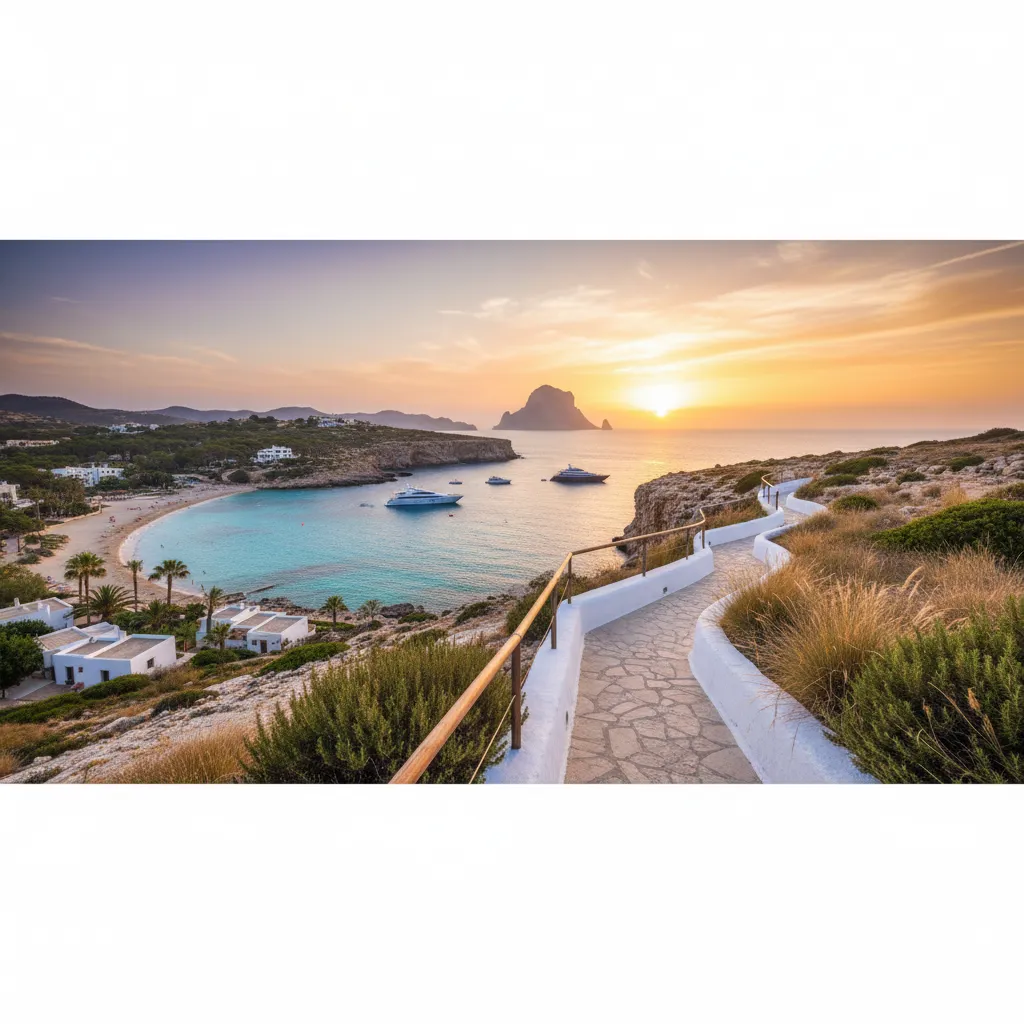
Forget the main resort beaches. The coves are where Ibiza earns its reputation. Cala d’Hort faces the dramatic rock island of Es Vedra and is one of the great sunset spots in the whole Mediterranean. Cala Conta has the pale sand and shallow turquoise water that photographs look staged. Ses Salines runs alongside ancient salt flats and has a calm, scenic atmosphere a few steps from one of the island’s best stretches of sand. These fill up in peak summer, but arrive before 10am or visit in spring or autumn and you can have a cove nearly to yourself. Note that some coves require a 20-minute hike, so wear appropriate footwear. Benirras in the north is famous for its drumming circles on Sunday evenings.
Santa Gertrudis and the Interior Villages
Inland, the village of Santa Gertrudis is the heart of bohemian Ibiza: leafy cafe terraces, art galleries, slow lunches, and no particular reason to hurry. On the east coast, Santa Eulalia offers a cosmopolitan marina, a promenade lined with restaurants, and the kind of comfortable pace that suits families and travellers who want sophistication without the party. The Es Canar hippie market has operated since 1973 and spreads over 500 stalls of crafts, clothes, and local produce. It is genuinely part of the island’s cultural story, not just a tourist attraction bolted on. Visiting these inland areas supports local businesses outside the tourist corridor.
When Is the Best Time to Visit Ibiza in 2026?
This decision shapes everything else: your budget, your crowds, your experience, and what version of the island you actually see. The Ibiza travel guide 2026 emphasizes that timing is everything. Here is the breakdown by season to help you plan effectively.
Peak Season (July & August): This is when the superclubs open their main residency schedules. Temperatures hover around 30°C (86°F), and prices for accommodation triple compared to spring. Expect crowded beaches and busy roads. Only choose this window if nightlife is your primary goal.
Shoulder Season (May, June, September, October): This is the sweet spot for most travelers. The weather is warm enough for swimming, particularly in September when the sea retains summer heat. Clubs are open but less chaotic, and nature trails are accessible without extreme heat. May and October offer the best value for money, with